


From Fresher to Cybersecurity Analyst: How Placement Support Accelerates Hiring
Landing cybersecurity analyst jobs as a fresher feels daunting when competing against experienced professionals. Structured placement support cuts the timeline from 8-12 weeks to 2-4 weeks by connecting you with hiring companies directly.
What challenges do freshers face when pursuing cybersecurity positions after completing training?
Freshers lack recruiter connections, interview experience, and salary negotiation confidence, creating 8-12 week delays between training completion and first interviews.
After completing ethical hacking training, most freshers face an employment plateau. You’ve learned tools and theory, but securing interviews requires navigation of job boards, resume optimization, and understanding what companies actually want from entry-level candidates.
The isolation compounds the challenge. Without industry connections, you’re one applicant among thousands applying to the same postings. Your resume gets reviewed alongside graduates from competing institutes without differentiation.
Interview anxiety affects performance. Freshers commonly freeze when discussing technical findings or get derailed by behavioral questions. This preparation gap costs job offers.
Why does placement support quality differ significantly across cybersecurity training institutes?
Institutes with active recruiter networks accelerate interviews to 2-4 weeks; those without placement support force freshers into unguided job searches.
What quality placement support includes:
- Documented recruiter relationships with companies actively hiring security analysts
- Direct introductions rather than waiting for resume screening
- Interview coaching specifically for cybersecurity technical questions
- Resume positioning emphasizing your strongest skills
- Salary range guidance preventing low-ball offers
- Follow-up support throughout the job search process
- Access to exclusive job postings from partner companies
Institutes without placement support claim “we help with placement.” This typically means access to a job board you could find yourself. No personalized coaching, no recruiter introductions, no interview preparation.
The difference shows in outcomes. Freshers with placement support report first interviews within 2-3 weeks. Unguided freshers wait 6-10 weeks before landing interviews.

What specific skills do cybersecurity employers actually verify in entry-level interviews?
Employers test hands-on tool proficiency, vulnerability assessment capability, and professional communication of security findings.
- Practical tool usage: Configure Nmap scans, explain Burp Suite findings, interpret Nessus reports with real data
- Vulnerability identification: Look at system output and identify actual security weaknesses
- Risk assessment: Determine severity levels using CVSS scoring or similar frameworks
- Professional communication: Explain technical findings to non-technical stakeholders without jargon
- Methodology knowledge: Walk through penetration testing steps from reconnaissance through reporting
- Problem-solving approach: Discuss how you’d investigate unfamiliar security scenarios
Employers don’t care about certifications alone. They verify you can actually use tools and think through security problems. This practical verification separates prepared freshers from theory-only graduates.
How can freshers stand out in cybersecurity interviews despite competing with experienced candidates?
Freshers differentiate through certified credentials, documented lab projects, confident tool demonstrations, and clear career commitment.
Certification Advantage
The certified ethical hacking credential immediately signals competency. CEH-certified freshers command ₹6-8 lakh starting salaries versus ₹5-7 lakhs for non-certified peers in identical roles. Employers specifically search for “CEH certified” candidates.
Portfolio Projects
Documented lab assessments prove capability. When you mention “I performed a penetration test on a deliberately vulnerable environment, identified 12 findings, and wrote professional reports,” you’re speaking experience language.
Interview Confidence
Freshers who demonstrate hands-on tool proficiency during interviews win offers. Walk through your actual lab work, explain findings clearly, show methodology understanding. Experienced candidates may have more projects, but you can match technical depth on recent training.
Career Clarity
Articulate why cybersecurity interests you specifically. Employers prefer freshers showing genuine interest over those taking any available job. Express specific interest in penetration testing, SOC operations, or incident response based on your training specialization.
What salary ranges should freshers realistically expect in cybersecurity entry-level roles across India?
Entry-level security analysts earn ₹5-8 lakhs depending on certification, location, company size, and negotiation skill.
Factors affecting fresher cybersecurity analyst salary:
- CEH or Security+ certification adds ₹1-2 lakh premium
- Metro locations (Bangalore, Mumbai, Delhi) offer 20-30% higher than tier 2 cities
- Large corporations pay more than startups or mid-size firms
- Remote positions sometimes offer metro salaries in tier 2 cities
- Negotiation skill can increase offers by ₹0.5-1 lakh
- Additional skills like cloud security or threat analysis add premium
Indore and tier 2 cities offer lower salaries than metros but also lower cost of living. A ₹6 lakh analyst role in Indore provides better savings than ₹8 lakh in Bangalore after rent costs.
Don’t accept first offers without negotiation. Companies expect pushback. Research salary ranges on Glassdoor and Ambition Box before interviews.
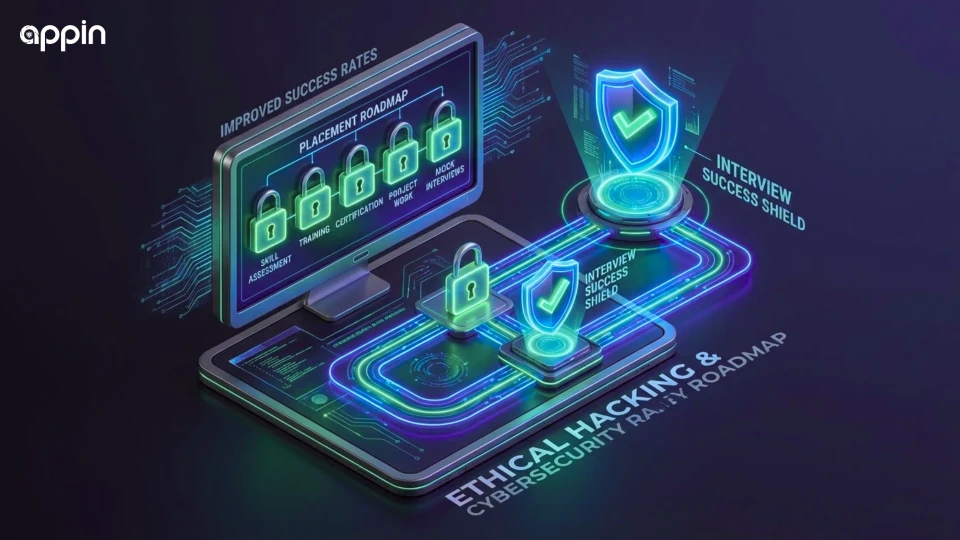
How does structured placement guidance directly improve interview success rates for freshers?
| Aspect | With Placement Support | Without Support | Impact |
|---|---|---|---|
| Interview Timeline | 2-4 weeks post-training | 8-12 weeks | 6-8 week acceleration |
| Warm Introductions | Direct recruiter connections | Cold applications | 40% higher response rate |
| Interview Coaching | Technical + behavioral prep | Self-study | 60% offer improvement |
| Resume Optimization | Professional positioning | DIY resume | Better screening pass-through |
| Salary Negotiation | Expert guidance | Guessing | ₹0.5-1 lakh difference |
| Job Board Access | Exclusive + general postings | General postings only | More opportunities |
Placement support reduces friction at every step. You’re not competing based purely on resume screening. Recruiters introduce you directly, saying “this fresher completed CEH training, knows Metasploit, and is ready for your analyst role.”
This warm introduction changes employer perspective. Instead of filtering through 500 applications, they speak with pre-screened candidates. Your success rate improves dramatically.
Can non-tech background freshers successfully compete for cybersecurity analyst jobs?
Non-tech freshers excel with quality training because communication skills and diverse perspectives compensate for technical background gaps.
Non-tech advantages in cybersecurity:
- Strong written communication for security reporting
- Ability to explain findings to business stakeholders
- Problem-solving skills from different industry experience
- Higher motivation competing against IT backgrounds
- Diverse thinking approaches to security challenges
- Customer-facing skills translating to client assessments
Quality training levels foundational gaps. Structured modules ensure non-tech freshers master networking and systems knowledge required for interviews. By training completion, background becomes irrelevant.
Graduate outcomes confirm this. Non-tech freshers from quality programmes secure ₹5-8 lakh analyst roles regularly. Employers evaluate your current capability, not your academic background.
What’s your action plan to secure your first cybersecurity analyst role as a fresher?
Contact training providers for alumni referrals, practice technical interviews, verify placement support specifics, apply strategically, and negotiate confidently.
- Request alumni contact information and speak with 3-5 recent graduates about their experience and timeline to employment
- Request sample lab access and spend time in actual hands-on environment to assess training quality
- Verify placement support details: recruiter relationships, interview coaching approach, documented success metrics
- Attend free demo classes and assess instructor expertise and curriculum structure
- Enroll in programmes with documented placement support and active recruiter networks
- Complete all hands-on labs and participate fully in interview coaching
- Practice technical interviews weekly using actual job questions from postings
- Research salary ranges for your target role and location before interviews
- Apply strategically rather than mass applications to relevant companies
- Negotiate confidently using market research data when offers arrive
Securing your first cybersecurity analyst jobs position depends on training quality plus placement support. Choose institutes with both components, prepare thoroughly, and execute confidently.
Ready to launch your cybersecurity career? Enquire now with Appin to explore training programmes with structured placement support.
