


The cyber security job description for freshers in India outlines entry level responsibilities, the skills employers expect, and typical salary ranges.
This guide is written for students, fresh graduates, and early career professionals who want a clear, practical path into security roles in India. It focuses on day to day tasks, the tools you should know, and how to prepare to get hired.
What does a cyber security fresher do?
A cyber security fresher helps monitor systems, triage alerts, and assist senior staff with incident tasks under supervision.
Daily duties often include reviewing security logs, running basic vulnerability scans, applying patches with guidance, and documenting incidents. Over time you move from following procedures to owning simple investigations and automated workflows.

Common entry level job titles
Freshers are usually hired as SOC analysts, junior security analysts, or incident response trainees.
- Security Operations Center (SOC) Analyst
- Junior Information Security Analyst
- Vulnerability Assessment Assistant
- IT Security Support Engineer
- Incident Response Trainee
Each title varies by organisation; some firms split monitoring and response into separate roles while others expect broader responsibility from day one.
Which technical skills do employers expect?
Employers expect freshers to have networking basics, familiarity with Windows and Linux, and the ability to read logs.
Key areas to learn include TCP IP, DNS, HTTP, basic routing and switching, Linux command line, and how to interpret system and firewall logs. Add scripting fundamentals such as simple Bash or Python to automate repetitive checks and you will stand out in interviews.
Which tools should a fresher know?
Freshers should be comfortable using SIEM tools, vulnerability scanners, packet capture utilities, and endpoint dashboards.
Practical tools to explore include:
- SIEM platforms for log aggregation and alerting, for example Splunk or its open source alternatives.
- Vulnerability scanners such as Nessus, OpenVAS, or free community tools for practice.
- Network analysis tools like Wireshark for packet capture and traffic inspection.
- Endpoint protection consoles, basic forensic tools, and ticketing systems like Jira for incident tracking.
Set up a small home lab with a VM running Linux and a simulated SIEM or log server to practice end to end workflows.
What soft skills matter for freshers?
Good communication, attention to detail, and the ability to follow process are essential for entry level roles.
Employers value clear incident notes, reliable documentation, a collaborative attitude, and a habit of learning through short experiments. Be ready to explain technical findings in simple language to non technical stakeholders during interviews and on the job.
Certifications and training that help
Structured training and practical certifications give freshers credibility and help them get interviews.
Look for programs that include hands on labs, scenario based assessments, and clear learning outcomes. Relevant options include cybersecurity certification programs, certified ethical hacking training, and targeted courses like the CEH v13 AI-powered course. For students who want applied testing skills, a bug bounty diploma program can also be valuable.
Choose courses that emphasise labs and reports rather than just multiple choice exams. Practical evidence of work is what hiring managers care about.
What salary can freshers expect in India?
Entry level salaries vary by city, company type, and the candidate’s hands on experience.
| Role | Typical starting salary (INR per year) | Notes |
|---|---|---|
| SOC Analyst / Junior Security Analyst | 2.5L – 4.5L | Common range for early career roles in service firms |
| Vulnerability Assessment Assistant | 3L – 5L | Higher if candidate has lab based projects or internships |
| Incident Response Trainee | 3L – 6L | Depends on firm size and sector sensitivity |
Salaries in major metros like Bengaluru, Mumbai, and Gurugram tend to be higher. Contract roles or startups may offer equity or rapid learning opportunities in exchange for lower initial pay.
Who hires freshers and where to look
Freshers are hired by managed security service providers, product companies, banks, and large enterprise IT teams.
Look for openings at SOCs, consulting firms, fintechs, and companies with dedicated security teams. Campus placement drives, internship programs, and targeted job boards for security roles are useful channels to find entry level positions.
How to prepare in 90 days
A focused 90 day plan can make you job ready for many entry level security roles.
- Month 1: Master networking basics, Linux commands, and core security concepts through short focused chapters and labs.
- Month 2: Practice with labs, a SIEM playground, vulnerability scanning, and simple capture the flag tasks to build a demo portfolio.
- Month 3: Build a small project, document findings as a report, complete mock interviews, and submit applications with your practical evidence.
Pair study with a short applied course that includes labs to show practical ability to employers. Record short walkthrough videos of your lab reports to include in applications.
Sample interview questions employers ask
Employers test fundamentals, problem solving, and your approach to incidents.
- Explain the difference between TCP and UDP and when each is used.
- How would you investigate a suspicious login from an unknown IP address?
- Describe a simple process to identify if a system is infected with malware.
- Which tools would you use to gather network traffic for analysis?
Answer these with clear steps, mention specific tools you have used, and cite a brief example from lab work or an internship if possible.
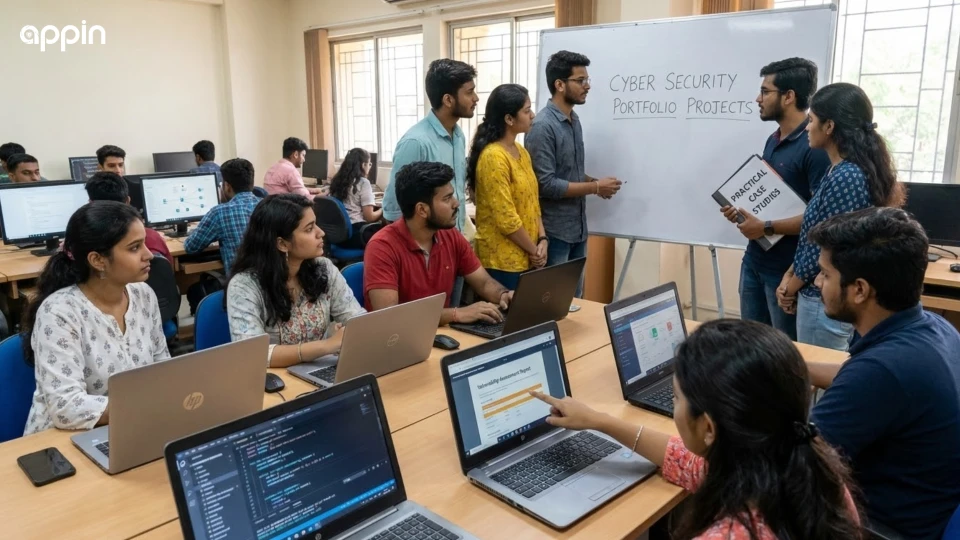
Practical projects and portfolios that help
Employers hire for evidence of applied work rather than theoretical knowledge alone.
- Document a vulnerability scan and the remediation steps you recommended.
- Build a small SIEM demo that ingests logs and flags simple alerts, then share a walkthrough report.
- Participate in capture the flag challenges and publish brief write ups of your approach.
Host code, scripts, and reports on GitHub and link them in your resume. Even small reproducible lab notes show you can perform tasks end to end.
Typical career path and growth
Entry level roles often lead to specialist or senior analyst positions within 2 to 4 years with steady skill building.
From SOC analyst you can move to roles such as security engineer, penetration tester, or incident response lead. Continuous learning, certifications, and contributions to real projects accelerate progression and pay growth.
Negotiating offers and next steps
When you get an offer, evaluate learning opportunities, team structure, and exposure more than the initial salary alone.
Ask about mentorship, on the job training, and the tools you will use. If salary negotiation is needed, present your lab projects, internship experience, and any certification scores to justify a higher band.
Understanding the cyber security job description for freshers in India helps you focus on the right skills and set realistic expectations for the first job and career growth.
Start with networking and operating system basics, practice with tools, and choose training that includes labs and assessments.
With disciplined practice and evidence of hands on work, freshers can access strong entry level roles and build toward specialised, higher paying security careers.
