

Choosing the right cyber security course in Indore means balancing practical labs, industry aligned modules, and placement support for entry level jobs. This guide explains course duration, core syllabus, lab work, certification options, fees, and realistic placement outcomes for freshers.
Who should consider a cyber security course in Indore?
Anyone with basic computer familiarity who wants a career in security should consider a cyber security course in Indore. This course path is relevant for students finishing 12th, fresh graduates from any stream, and early career professionals who want practical, job oriented training and certification guidance.
The content below is written for beginners and focuses on what matters to hiring teams: hands on labs, project work, and clear certification routes. Read on to understand formats, timelines, cost ranges, and how to judge a training provider.
How long does a typical beginner cyber security course take?
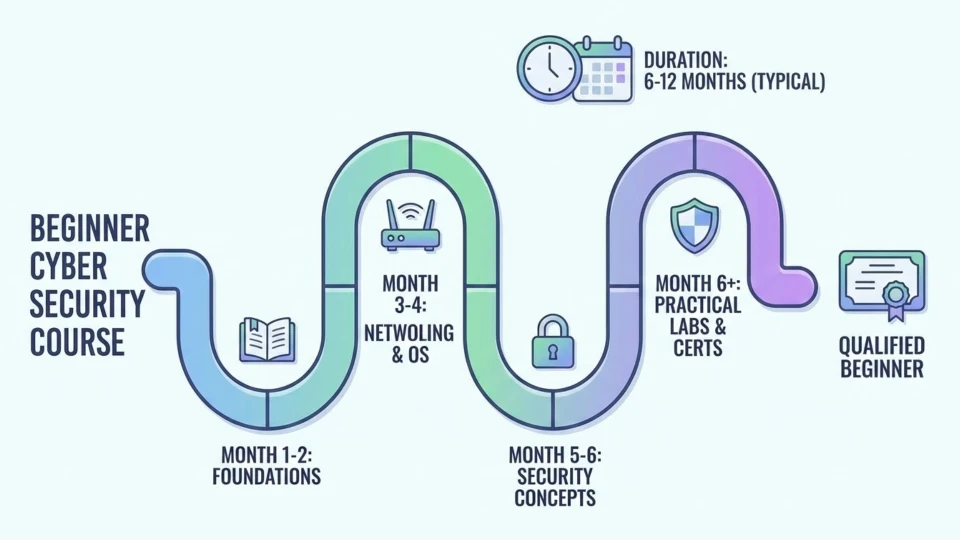
Most beginner cyber security courses run between three months and nine months depending on depth and delivery format. Short bootcamps of three months cover core tools and labs, while extended programs of six to nine months combine multiple certification tracks and placement prep.
Formats vary from intensive weekday classes to weekend batches and blended online plus in person lab access. Choose a schedule that gives you at least 10 to 15 hours per week for hands on practice and project work.
What modules and topics are included in the syllabus?
A beginner syllabus teaches fundamentals first, then introduces practical security tasks and methodologies. Core topics usually cover networking basics, Linux fundamentals, web security, vulnerability assessment, basic penetration testing, and incident response.
- Network fundamentals and TCP/IP concepts
- Linux command line and basic system administration
- Web application security with OWASP top 10 focus
- Basic scripting with Python or Bash for automation
- Vulnerability scanning, analysis, and reporting
- Introduction to penetration testing methodology
- Log analysis and incident response workflow
Good programs include mini projects tied to each module so you can show demonstrable work during interviews.
What hands on labs and tools should a beginner expect?
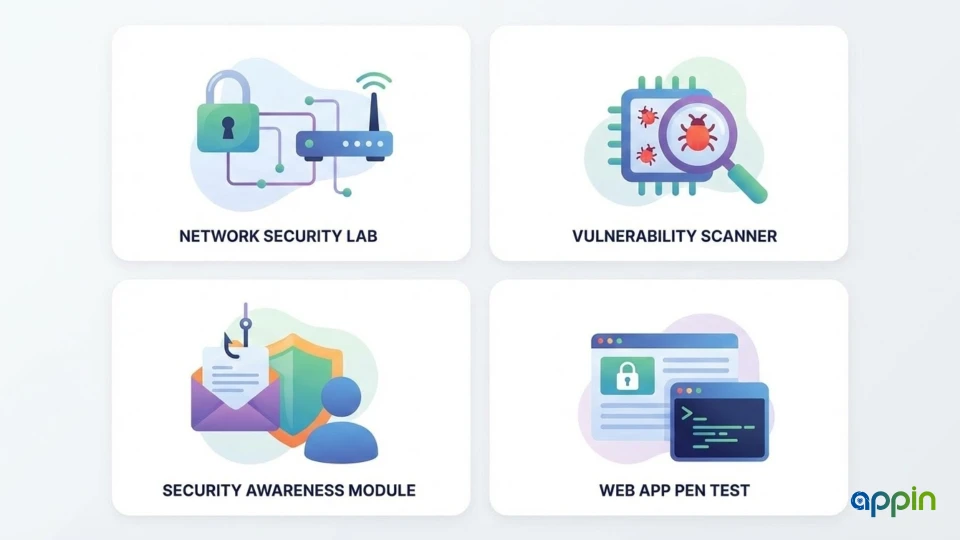
Hands on labs are essential and should form the majority of practical sessions. Expect guided labs using Kali Linux, Nmap, Wireshark, Burp Suite, Metasploit, and industry scanners in isolated lab networks.
Typical lab exercises include packet capture and analysis, port scanning, vulnerability scanning, exploiting intentionally vulnerable targets, and web app testing in safe environments. These tasks build transferable skills that employers value for junior security roles.
- Setting up and using Kali Linux in a virtual lab
- Running Nmap scans and interpreting results
- Performing web app tests using Burp Suite and OWASP ZAP
- Using Metasploit for controlled exploitation in lab VMs
- Log collection and basic SIEM style analysis
Which certifications and career paths are relevant after the course?
Beginner courses aim to prepare you for entry level certifications and a clear certification roadmap beyond that. Common next steps include vendor neutral certificates and domain specific credentials for ethical hacking or SOC skills.
Examples of certification paths to consider are introductory network and security certificates followed by specialized tracks such as ethical hacking. Appin related paths often map to recognized certificates and career roles.
- Entry level security certificates for foundational knowledge
- cybersecurity certification programs for structured progression
- certified ethical hacking training for offensive security basics
- Advanced options like CEH v13 AI-powered course as a follow up for penetration testing
- Specialist electives such as a bug bounty diploma program for hands on vulnerability discovery
How much do beginner cyber security courses usually cost in Indore?
Course fees vary by duration, trainer experience, and lab infrastructure. Short bootcamps may cost between ₹12,000 and ₹40,000 while longer industry aligned programs with placement support typically range from ₹40,000 to ₹1,20,000.
When comparing fees, check if the price includes lab access, certification exam vouchers, mock interviews, and placement assistance. Some institutes offer instalment plans, early bird discounts, or need based scholarships for eligible students.
What placement support should beginners expect?
Effective placement support combines interview coaching, resume guidance, and employer outreach. For freshers, look for mock technical interviews, soft skill sessions, and assistance building a portfolio of projects.
- Resume building and role based positioning
- Mock technical interviews and scenario based assessments
- Soft skills coaching for client communication and interviews
- Access to internship and entry level job pipelines via campus recruiters
- Support in showcasing lab projects and GitHub portfolios
Ask potential providers for placement metrics, sample employer lists, and the average time taken by past students to secure roles.
What job roles and salary range can freshers expect in India?
Typical entry level job titles include SOC analyst, junior security analyst, vulnerability analyst, and trainee penetration tester. Freshers can expect starting salaries broadly between ₹2.5 lakh and ₹5 lakh per year depending on company and location.
Companies such as MSSPs, product firms, consulting teams, and startups offer trainee tracks or internships that convert to full time roles. Building a small portfolio and completing at least one recognized certification can improve starting offers.
How to evaluate and choose the right course in Indore?
Choose a course that balances hands on practice, certification mapping, and transparent placement support. Validate the syllabus, instructor experience, lab access, and alumni outcomes before enrolling.
Use this checklist when you evaluate providers:
- Updated syllabus that maps to current industry tools
- Verified instructor experience and practical background
- Clear lab access policy and realistic practice hours
- Placement support details and alumni success stories
- Transparent fee structure, refund policy, and batch flexibility
What projects or portfolio pieces should a beginner build?
Small, well documented projects demonstrate practical ability better than a long list of courses. Beginners should focus on reproducible exercises with clear write ups and code or logs hosted on GitHub or a personal blog.
- Documented vulnerability assessment of lab machines with reports
- Capture the Flag problem write ups with steps and code samples
- Simple automation scripts for scanning and basic reporting
- Incident response checklist with sample log analysis
Ensure all practice is done in controlled lab environments and never publish exploits against live systems without permission.
How long before a fresher can realistically get a job?
With focused training and deliberate practice, many freshers secure entry level roles within three to six months after course completion. The timeline depends on practice hours, interview readiness, and networking with recruiters.
Continuous lab work, completing at least one certification, and regular mock interviews reduce time to hire significantly. Use placement support and recruiter introductions to accelerate the process.
Conclusion: Practical next steps for students in Indore
Start by selecting a course that emphasises labs, certification mapping, and placement support, then commit to regular practice and project documentation. Practical experience combined with clear communication of your projects makes you stand out to employers.
Before enrolling, request a sample lesson, check lab access terms, and speak with alumni if possible. A focused cyber security course for beginners in Indore can lead to a solid entry level security role when paired with sustained practice and visible project work.
