


AI-Powered Hacking Tools in CEH v13: What You’ll Learn in 2026
CEH v13 is the latest version of the Certified Ethical Hacker program updated to reflect modern attack techniques and AI driven security operations. Earlier versions focused heavily on manual tools and static attack patterns. By 2026, attackers had already moved toward automation and intelligent malware, forcing the certification to evolve.
The update was introduced to align ethical hacking training with how real organizations defend cloud platforms, enterprise networks, and large scale digital systems. Security teams now face thousands of alerts daily. Without intelligent filtering and automation, important threats get missed. CEH v13 addresses this gap.
Key reasons for the update include:
- Increased use of AI by attackers to automate scanning and exploitation
- Growing reliance on cloud infrastructure and remote systems
- Demand for faster vulnerability prioritization
- Shift toward proactive threat hunting instead of reactive defense
CEH v13 now teaches candidates how AI supports ethical hacking rather than replacing human judgment. Students learn where automation helps and where manual expertise is still critical. This balance is important for job readiness in India, where companies expect professionals who can adapt tools to business contexts instead of blindly trusting outputs.
Which AI-powered hacking tools are included in CEH v13?
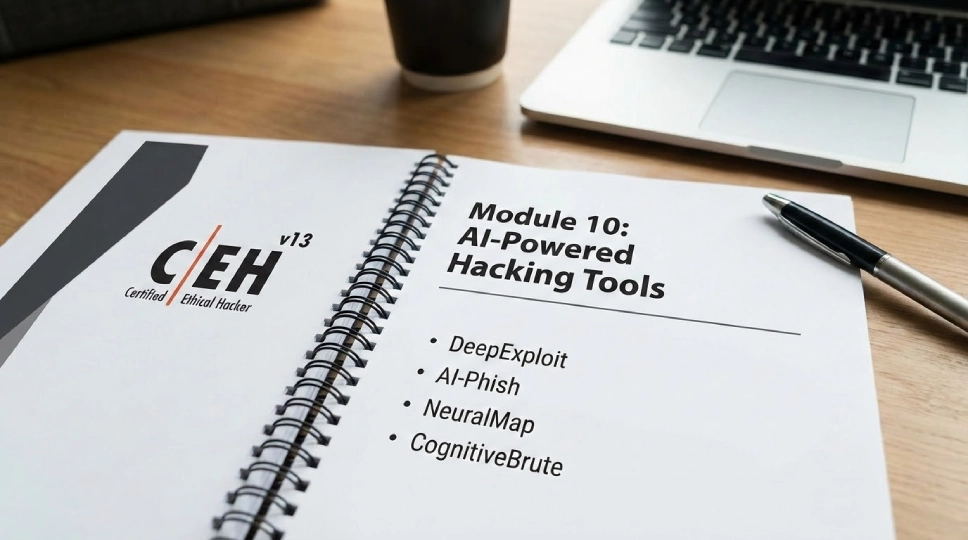
CEH v13 includes multiple AI powered hacking tools that help ethical hackers work faster, smarter, and more accurately. These tools are not standalone magic solutions. They assist professionals by analyzing data patterns, ranking risks, and suggesting possible attack paths.
Students learn how AI enhances common hacking phases such as reconnaissance, scanning, exploitation, and reporting. Instead of manually reviewing thousands of results, AI driven tools highlight the most relevant findings.
Key categories of AI powered hacking tools covered include:
- Intelligent vulnerability scanners that prioritize risks based on exploitability
- Automated reconnaissance tools that analyze target behavior patterns
- Machine learning based malware analysis tools
- AI assisted password and credential testing frameworks
- Behavioral anomaly detection tools for network traffic
For example, AI powered scanners do not just list vulnerabilities. They assess which weaknesses are actively exploitable and which ones pose real business risk. This saves time and improves decision making.
CEH v13 also introduces students to AI driven social engineering simulations. These tools analyze human behavior patterns to create realistic phishing and attack scenarios. Understanding these techniques helps ethical hackers design better defenses.
Importantly, CEH v13 teaches ethical use and limitations of AI tools. Students learn that AI outputs require human validation. Blind trust in automation can lead to false positives or missed threats. This practical approach prepares learners for real enterprise environments in India, where compliance, accuracy, and accountability matter.
How do AI tools change penetration testing workflows?
AI tools change penetration testing workflows by reducing manual effort while improving accuracy and speed. Traditional penetration testing required long hours of scanning, data review, and reporting. Many valuable insights were buried under repetitive tasks.
With AI assisted workflows, ethical hackers focus more on analysis and strategy. Automation handles repetitive scanning while humans make judgment calls.
Key workflow improvements include:
- Faster reconnaissance through automated data collection
- Smarter vulnerability prioritization using risk scoring
- Reduced false positives through pattern analysis
- Improved reporting with contextual insights
Instead of testing everything equally, AI tools guide testers toward high impact vulnerabilities. This aligns penetration testing with business priorities rather than checklist driven audits.
For students learning AI powered hacking tools in CEH v13, this workflow shift is important. Employers expect entry level professionals to understand how testing fits into broader security operations. CEH v13 trains candidates to think like security analysts, not tool operators.
AI also supports continuous testing models. Ethical hackers no longer test systems once a year. Automated tools enable ongoing monitoring, which is increasingly common in cloud and enterprise environments across India.
By learning these workflows early, fresh graduates adapt faster when they enter SOC teams, consulting roles, or internal security departments.
What skills will fresh graduates gain from CEH v13?
Fresh graduates gain a balanced mix of technical, analytical, and operational skills from CEH v13. The program goes beyond tool usage and focuses on decision making and risk assessment.
Key skills developed include:
- Understanding AI assisted vulnerability assessment
- Interpreting automated scan results
- Prioritizing security risks based on business impact
- Ethical handling of sensitive data
- Reporting findings clearly to technical and non technical teams
Students also gain exposure to how AI integrates with traditional hacking tools. This prevents dependency on automation and builds confidence in manual validation techniques.
CEH v13 strengthens problem solving skills by teaching candidates to question results rather than accept them blindly. This mindset is highly valued in security roles where false alarms are common.
For Indian graduates from commerce, arts, or science backgrounds, these skills help bridge the gap between academic knowledge and industry expectations. CEH v13 does not assume prior coding expertise. Instead, it builds foundational understanding step by step.
By the end of training, students understand how AI supports ethical hacking without replacing human expertise. This clarity helps them perform better in interviews and on the job.
What job roles become accessible after learning AI-powered hacking tools?
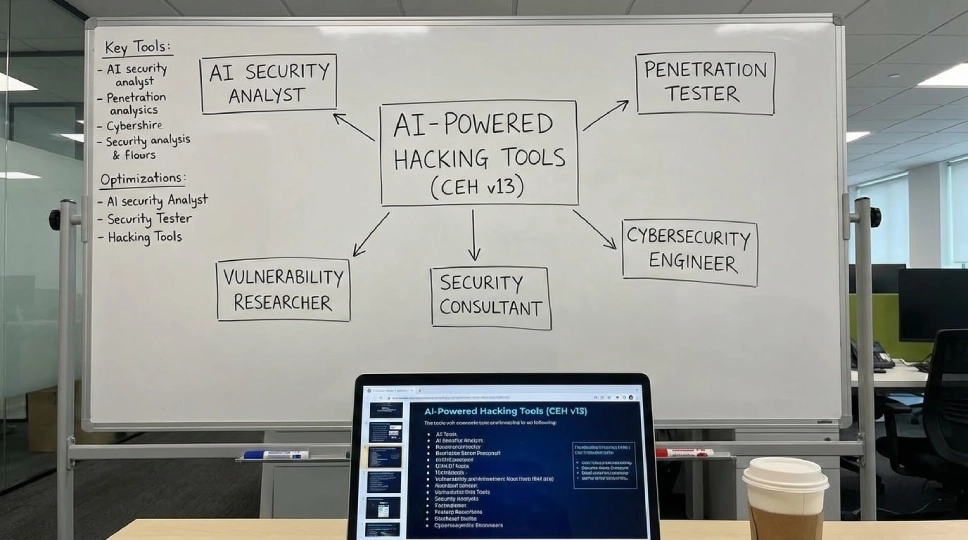
Learning AI powered hacking tools in CEH v13 opens access to multiple entry level and mid level cyber security roles in India. Companies value professionals who can work efficiently with modern security platforms.
Common job roles include:
- SOC Analyst
- Junior Penetration Tester
- Vulnerability Assessment Analyst
- Cyber Security Analyst
- Threat Monitoring Associate
In consulting firms, CEH v13 certified candidates often support senior testers by handling automated scans, result analysis, and documentation. In enterprise environments, they assist SOC teams in monitoring alerts and investigating anomalies.
AI familiarity also improves long term career growth. As professionals gain experience, they transition into roles such as:
- Senior Penetration Tester
- Security Consultant
- Red Team Analyst
Understanding automation early helps professionals scale their impact instead of getting stuck in repetitive tasks. This makes CEH v13 particularly valuable for early career professionals planning long term growth.
Is CEH v13 suitable for beginners in India?
CEH v13 is suitable for beginners in India because it introduces AI concepts without assuming advanced technical backgrounds. The curriculum is structured to build understanding gradually.
Beginners benefit because:
- Concepts are explained with real world security examples
- Tools are taught with guided scenarios
- Ethical boundaries are emphasized clearly
- No advanced programming knowledge is required initially
Students from BCom, BSc, BA, and engineering backgrounds can follow the content with proper guidance. CEH v13 focuses on mindset and methodology rather than memorizing commands.
For Indian learners, affordability and employability matter. CEH v13 aligns training with job market demand rather than academic theory. It prepares students for entry level roles while setting a foundation for advanced learning.
With the right training support, beginners can confidently transition into cyber security roles without feeling overwhelmed by AI terminology or complex mathematics.
Is CEH v13 worth learning in 2026?
CEH v13 is worth learning in 2026 because it reflects how ethical hacking actually works in modern organizations. The inclusion of AI powered hacking tools makes the certification relevant for current and future job roles.
For Indian students and fresh graduates, CEH v13 offers a structured path into cyber security without requiring years of technical experience. It balances automation with human decision making, which is critical for real world security work.
By learning AI powered hacking tools in CEH v13, candidates gain skills that employers actively look for in SOC teams, consulting firms, and enterprise security departments. The certification does not guarantee a job, but it significantly improves readiness and confidence.
For those serious about building a long term cyber security career, CEH v13 remains a practical and future focused choice in 2026.
