

Start a practical cyber security career in India by focusing on hands on skills, recognised certifications, and a clear 6 to 12 month roadmap you can follow to move from learning to entry level roles.
What should a beginner focus on?
Begin with fundamentals and practical work rather than theory alone.
The fastest route into a cyber security career in India is to combine networking basics, Linux familiarity, and a single hands on certification with regular lab practice. This approach shows employers you can apply skills on day one and helps you clear technical interviews faster.
Why choose cyber security as a career in India?
Cyber security offers steady demand, diverse roles, and clear progression for motivated beginners.
Companies across finance, e commerce, product engineering, and government need people who can protect systems and data. That creates consistent hiring for entry level positions in major cities and remote friendly roles that suit early career professionals.
- High demand across sectors with entry level vacancies listed regularly.
- Multiple specialisation paths such as cloud security, incident response, and vulnerability assessment.
- Progression from analyst to specialist roles with clear salary growth after 2 to 4 years.
Which entry level roles can freshers target?
Freshers can aim for SOC analyst, junior security analyst, security operations intern, or trainee penetration testing roles.
These roles focus on monitoring, basic investigations, running scans, and assisting senior engineers. Job titles vary by company but the core entry responsibilities remain similar and teach essential on the job skills.
- SOC Analyst / Tier 1: Monitor alerts, triage incidents, and create tickets for escalation.
- Junior Security Analyst: Assist vulnerability assessments, handle routine audits, and support compliance work.
- Associate Penetration Tester: Work under supervision to run scans, follow test plans, and write findings.
- Security Operations Intern: Gain exposure to SIEM, log analysis, and incident workflow.
What skills do employers expect from beginners?
Employers expect solid fundamentals in networking, operating systems, security tooling, and basic scripting.
Beyond theory, hiring managers look for proof that you can use tools, collect evidence, and write clear incident summaries. Communication and the ability to learn on the job are frequently listed as must have qualities.
- Networking: TCP IP, DNS, HTTP, common ports and packet flows.
- Operating systems: Comfortable with Linux commands and Windows basics.
- Security tools: Familiarity with Nmap, Wireshark, basic vulnerability scanners, and SIEM concepts.
- Scripting: Small Python or Bash scripts to automate simple tasks.
- Reporting: Clear writing for incident and vulnerability reports.
Which courses and certifications should beginners consider?
Choose practical, job oriented courses with lab access and one recognised certification to validate your skills.
Begin with networking and Linux modules, then move to practical ethical hacking or security operations training that includes labs. Recognised certifications provide a hiring signal, while project work and lab reports prove you can do the job.
- Foundational courses in networking and Linux to build technical comfort.
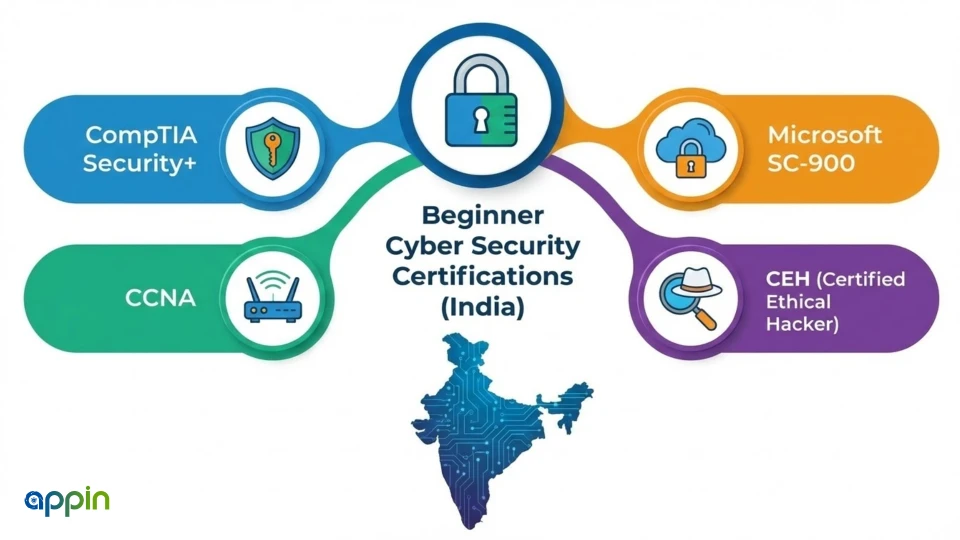
- Entry level certifications such as CompTIA Security+ or vendor neutral practical courses.
- Job oriented training tracks that include labs, guided projects, and mock interviews.
| Certification | Level | Typical entry roles |
|---|---|---|
| CompTIA Security+ | Beginner | Junior security analyst, SOC analyst |
| Certified Ethical Hacking or equivalent course | Beginner to intermediate | Associate penetration tester, vulnerability assessor |
| Vendor or product specific SIEM training | Beginner | SOC analyst, security operations support |
How to gain practical experience: labs, CTFs, and internships
Practical experience is the most important proof you can show to employers.
Structured labs, beginner friendly capture the flag challenges, and internships teach workflow, tool use, and report writing. Documenting your work makes it easy to show hiring managers what you did and why it mattered.
- Complete structured lab exercises and save write ups as portfolio items.
- Participate in beginner CTFs focusing on web, networking, and basic forensics.
- Apply for internships or trainee positions to learn alert handling and ticket management.
How to build a job ready portfolio and CV
A concise portfolio with clear outcomes helps you stand out in interviews.
Include short project summaries, sample vulnerability reports, and links to scripts or GitHub repositories. Each portfolio item should explain the task, steps taken, and the final outcome in plain language.
- One page CV highlighting role relevant skills and one achievement per skill.
- Portfolio PDF with 3 to 5 short reports and GitHub links to supporting scripts.
- Prepare simple narratives for interviews, for example how you resolved a lab incident.
What salary and progression can beginners expect?
Entry level salaries vary by city and company but improve quickly with experience and specialisation.
Fresh graduates and interns often start between ₹2.4 and ₹4.5 lakh per year depending on the employer. With an internship, certification, and demonstrable projects, junior analysts can reach ₹4 to ₹7 lakh per year, and specialists earn more after two to four years.
- Interns and freshers: typical starting range ₹2.4–4.5 lakh per year.
- Junior analysts with practical experience: ₹4–7 lakh per year.
- Specialist roles in cloud security or pentesting: higher ranges after experience.
Roadmap: A detailed 6 to 12 month plan for beginners
A focused month by month plan helps you move from basics to interview ready within a year.
- Months 1–2: Study TCP IP, DNS, and HTTP. Learn basic Linux commands and set up a personal lab. Aim for weekly small labs.
- Months 3–4: Take a hands on security course that includes vulnerability scanning and basic web testing. Start documenting each lab as a short report.
- Months 5–6: Join beginner CTFs, focus on repeatable tasks, and prepare a one page portfolio. Apply for internships and trainee roles.
- Months 7–9: Complete an entry level certification and continue lab practice. Start applying to junior roles and prepare for technical interviews.
- Months 10–12: Secure a role or extend internship, then choose a specialisation such as cloud security or incident response and pursue role specific training.
How to prepare for interviews and live tests
Interview preparation should combine technical practice and clear communication of your projects.
Expect practical questions, simple troubleshooting tasks, and behavioural questions about teamwork. Practice short explanations of your lab reports and be ready to walk through one or two technical scenarios step by step.
- Prepare three project stories with problem, action, and result format.
- Practice reading and explaining packet captures, and describe how you would escalate an incident.
- Be ready for a short live exercise such as identifying open ports or interpreting logs.

Next steps and final checklist
Start small, practice consistently, and document every exercise you complete.
Focus on networking and Linux first, then move to security tools and a recognised certification. Apply for internships early and keep updating your portfolio with lab reports and code samples.
- Complete at least 20 lab exercises and save a short report for each.
- Finish one recognised certification and add it to your CV.
- Apply to internships, SOC trainee roles, or junior analyst positions while you continue learning.
