

The ethical hacking course in Indore explains the syllabus, fee ranges, lab access, and entry level jobs for students and fresh graduates seeking a practical route into cybersecurity.
What is an ethical hacking course and who should take it?
An ethical hacking course in Indore teaches safe, legal methods to identify and fix security weaknesses in systems and applications.
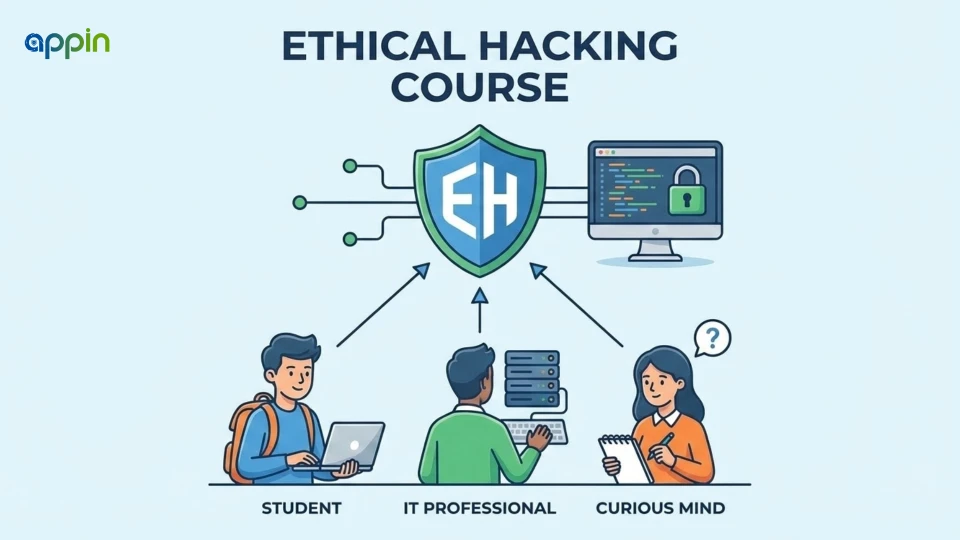
The course is suitable for students, fresh graduates, and early career professionals who want a hands on path into cybersecurity. Expect a blend of networking fundamentals, Linux, web security, network testing, and prolonged lab practice that builds a portfolio you can show employers.
Why study ethical hacking in Indore now?
Yes, Indore provides affordable training options, local industry links, and supervised labs that help beginners learn faster.
Indore has a growing IT and services ecosystem and training centers there offer weekday and weekend batches designed for students. Local training reduces travel and scheduling friction and makes it easier to attend in person labs and meet mentors directly.
Core syllabus overview and module details
The syllabus covers foundational IT concepts, security fundamentals, practical testing techniques, and career readiness modules.
Below is an extended syllabus outline with typical topics and what you should be able to do after each module.
| Module | Key topics | Outcomes | Hours |
|---|---|---|---|
| Foundations | Networking basics, TCP IP, OSI model, Linux basics | Set up networks and use Linux command line | 25 |
| System Security | Windows internals, user rights, patching, hardening | Harden endpoints and document security gaps | 20 |
| Web Application Testing | OWASP Top 10, SQL injection, XSS, CSRF | Find and report common web vulnerabilities | 35 |
| Network Testing & Tools | Nmap, Wireshark, Metasploit, basic exploit chains | Scan networks and perform controlled tests | 30 |
| Hands on Labs | Vulnerable VMs, CTF tasks, bug reporting, root cause | Build a portfolio of documented lab reports | 50 |
| Report and Career Prep | Writing assessment reports, resume and interview prep | Present findings clearly and prepare for interviews | 15 |
Essential tools and platforms you will use
Yes, beginner courses introduce industry standard tools and safe lab platforms to practice on.
Familiarity with these tools will matter in interviews. Use them in supervised labs and personal practice projects to convert theory into practical skills.
| Tool | Use case |
|---|---|
| Nmap | Network discovery and port scanning |
| Wireshark | Packet capture and traffic analysis |
| Burp Suite | Web testing, proxying, and vulnerability discovery |
| Metasploit | Exploit framework for controlled testing |
| Vuln VMs / CTF platforms | Practice on intentionally vulnerable machines |
Format options and expected duration
Courses are delivered as classroom, online, or hybrid and typically take 8 to 16 weeks depending on intensity.
Full time bootcamps compress the syllabus into a few weeks while part time evening or weekend batches stretch over months. Choose a schedule that allows at least 40 to 60 hours of lab practice during the course.
How much do ethical hacking courses cost in Indore?
Course fees vary by depth, lab access, and placement support, commonly between ₹25,000 and ₹75,000 for comprehensive beginner programs.
Costs increase if the provider includes official exam vouchers, extended mentor hours, one on one career coaching, or placement guarantees. Many institutes offer EMI, scholarships, or early bird discounts, so ask about payment options and what the fee covers before enrolling.
What to expect from lab access and projects
Hands on labs and projects are the most important part of any honest training program.
Prefer courses that provide sandboxed vulnerable machines, clear step by step exercises, and final capstone projects such as a simulated penetration test or a documented vulnerability report you can share with recruiters. Building a portfolio of lab reports and GitHub projects will differentiate you as a fresher.
Recommended beginner projects and portfolio ideas
Yes, small practical projects show employers you can apply skills.
- Document a basic network scan and write a short risk report.
- Exploit a vulnerable VM in a safe lab and create an assessment write up.
- Build a simple web app and then find and fix an OWASP Top 10 bug.
- Participate in a beginner CTF and summarise your learning.
Certifications and career progression
Certifications add credibility when paired with lab experience and a portfolio.
Start with vendor neutral courses and then take role based certifications as you gain experience. Appin related certification paths often referenced by learners include cybersecurity certification programs, certified ethical hacking training, the CEH v13 AI-powered course, and advanced options like the bug bounty diploma program. These help map a clear learning path from beginner to specialist roles.
Entry level roles and salary expectations
Typical first roles include security analyst, SOC analyst, and junior penetration tester with starting salaries around ₹2.5 to 6 LPA.
| Role | Tasks | Typical starting salary |
|---|---|---|
| Security analyst | Monitor alerts, run vulnerability scans, document issues | ₹2.5 to 5 LPA |
| SOC analyst | Work in shifts, triage incidents, escalate for remediation | ₹2.5 to 4.5 LPA |
| Junior penetration tester | Assist in testing, run automated tools, write findings | ₹3 to 6 LPA |
Salaries depend on company size, city, and your proven skills. Demonstrable lab work and a clear portfolio can push offers to the higher side of these ranges.
How to evaluate and choose the right training provider
Choose providers that publish a clear syllabus, lab hours, sample exercises, and alumni outcomes.
- Ask for a free demo class and request sample lab access.
- Verify instructor experience and real industry projects.
- Confirm how many supervised lab hours are included and whether you get access after class.
- Request placement statistics or employer lists and check alumni reviews.
- Avoid courses that promise instant jobs with no skill verification.
Interview preparation and resume tips for freshers
Yes, a concise resume and practical examples beat generic claims in interviews.
- Keep a one page resume with key projects, tools used, and a short lab portfolio link.
- Prepare to explain your process, not only the result. Interviewers want to see how you think.
- Practice common technical questions and a short demo of a lab task if asked.
Internships, freelancing, and building experience
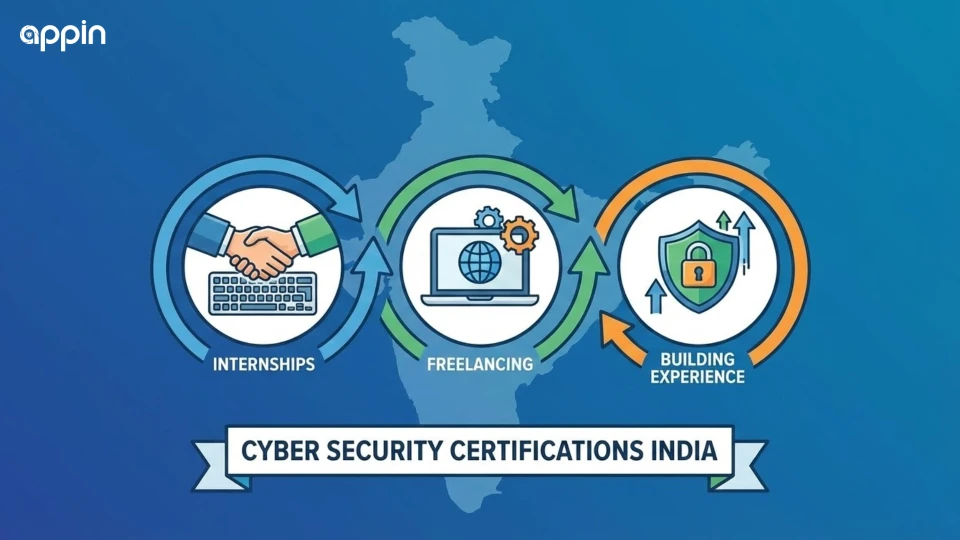
Internships and small freelance tasks help you bridge the gap from training to paid roles.
Apply for internships at local companies, volunteer for nonprofit security audits, or try controlled bug bounty programs to build real reports. Even small freelance testing projects that result in documented findings improve credibility.
Practical next steps before you enroll
Start with basic networking and Linux tutorials, then shortlist two to three courses and compare their lab access and mentor support.
- Set aside weekly hours for lab practice and self study.
- Ask for batch timings, lab schedule, and post course mentor support before paying.
- Plan to complete at least three practical projects and one detailed assessment report during the course.
Is an ethical hacking course in Indore right for you?
Yes, if you commit to sustained practice and choose a course with strong lab components and transparent career support.
Focus on hands on practice, build a portfolio of reports and projects, and follow a clear certification path to make your transition into security roles faster. With discipline and the right training you can move from beginner to a paid role in security operations or testing within months.
