

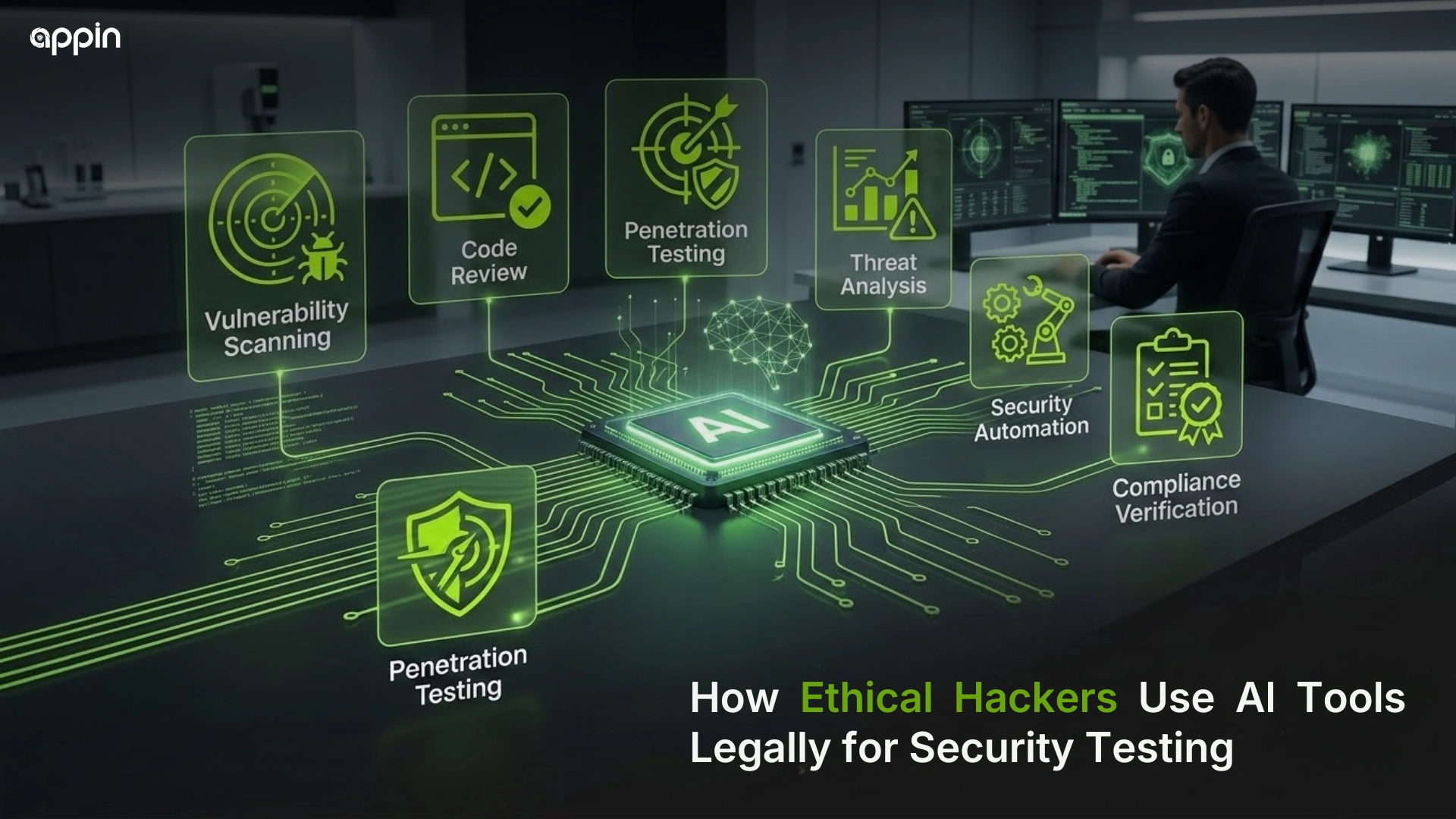
How Ethical Hackers Use AI Tools Legally for Security Testing
Ethical hackers use AI tools legally when they work inside approved labs, company assessments, bug bounty scope, or training environments.
Many students ask, “Can I use AI for ethical hacking without breaking the law?” The answer is yes, but only when permission is clear. AI can help you learn faster, organize testing, review reports, and understand findings, but it does not make unauthorized testing legal.
AI is also changing job skills, so students should understand the big picture before using tools blindly. AI changing cybersecurity jobs connects this shift with real cybersecurity careers.
Can ethical hackers use AI tools legally?
Yes, ethical hackers can use AI tools legally when they use them inside approved security testing, training labs, internal assessments, or bug bounty programs with clear scope.
Permission is the first rule. If you do not own the system and do not have written approval, you should not test it.
AI ethical hacking is legal only when the activity itself is legal. A tool does not decide legality. Scope, consent, and purpose decide it.
For students, this means using AI inside classroom labs, virtual machines, CTFs, intentionally vulnerable apps, and guided training tasks.
What does legal security testing mean in AI assisted ethical hacking?
Legal security testing means checking only those systems, apps, accounts, or networks where testing permission is clearly given.
Legal use of AI in cybersecurity testing may include:
- Company approved testing
- Client approved VAPT
- Bug bounty scope
- Personal lab environments
- CTF platforms
- Intentionally vulnerable apps
- Course based practice labs
Random website testing is risky and can be illegal. Even if AI suggests a test, you are still responsible for your action.
To understand where AI support becomes unsafe or illegal, read AI use and legal boundaries
How do ethical hackers use AI tools for learning cybersecurity concepts?
Ethical hackers use AI tools to understand vulnerabilities, security terms, attack patterns, and defensive controls in simple language.
AI tools for ethical hacking beginners can help explain OWASP Top 10, Linux commands, networking terms, HTTP status codes, and basic vulnerability concepts.
Students can use AI for:
- Study notes
- Interview practice
- Concept revision
- Security term explanations
- Difference between risk and impact
- Understanding defensive controls
AI tools cybersecurity learning becomes useful when you verify answers through labs, mentors, and trusted documentation.
How do ethical hackers use AI tools during test planning?
Ethical hackers use AI tools to organize test plans, checklists, scope notes, and security testing workflows before starting an authorized assessment.
AI security testing support can help convert a messy scope into a cleaner plan. For example, if a lab has a login page, upload form, admin panel, and API endpoint, AI can help organize what to test first.
AI can support:
- Scope understanding
- Testing checklist creation
- Asset grouping
- Risk based planning
- Questions to ask before testing
- Time and priority planning
Human review is still needed because AI may miss business context or suggest out of scope actions.
How do ethical hackers use AI tools for code review?
Ethical hackers use AI tools to review code for possible security weaknesses, but they must manually verify whether the finding is real.
AI can help point out hardcoded secrets, weak authentication logic, missing input validation, unsafe error messages, and dependency risks.
This is one way how AI helps ethical hackers find vulnerabilities, but it is not final proof. AI may show false positives or miss deeper business logic flaws.
A beginner should treat AI output like a suggestion, not a confirmed report.
How do ethical hackers use AI tools with vulnerability scanners?
Ethical hackers use AI tools to understand scanner reports, group repeated findings, explain severity, and prepare clearer remediation notes.
AI for penetration testing and vulnerability analysis can help beginners read scanner output more confidently. For example, it can explain why missing security headers matter or why duplicate alerts should be grouped.
AI can help with:
- Explaining scan findings
- Understanding severity
- Removing duplicate alerts
- Identifying possible false positives
- Prioritizing high risk issues
- Writing fix suggestions
Scanner output should never be trusted blindly. Human validation decides whether the issue is real.
How do ethical hackers use AI tools for web application security testing?
Ethical hackers use AI tools to understand web security concepts, analyze authorized findings, and improve documentation during web app testing.
AI can explain HTTP requests and responses, cookie behavior, session basics, and OWASP Top 10 concepts. It can also help convert technical notes into clear report language.
Safe use includes:
- Explaining request and response data from labs
- Understanding cookie and session behavior
- Summarizing web testing notes
- Drafting impact statements
- Improving remediation wording
It should not be used to attack real websites, bypass login systems, or test outside permission.
Which AI tools are useful for ethical hacking students?
Useful AI tools for cybersecurity students include assistants for learning, code review, report writing, log explanation, and security workflow support.
Students should understand categories before chasing tool names. AI tools can support research, coding review, scanner interpretation, SOC alert summaries, and documentation.
For a course focused view, read AI tools in CEH v13
Ethical hacking tools still matter. AI can support tools like scanners, proxies, SIEM platforms, and log analysis workflows, but it cannot replace hands-on practice.
How do ethical hackers use AI tools for SOC and log analysis?
Ethical hackers and SOC learners use AI tools to summarize logs, understand alerts, and build incident timelines in safe lab environments.
AI can help explain a login failure pattern, summarize endpoint alerts, or organize incident notes. In a SOC role, this can reduce manual reading time.
AI may support:
- Log explanation
- Alert summaries
- Suspicious pattern notes
- IOC explanation
- Timeline writing
- SIEM query understanding
The final decision should stay with a trained human analyst.
How do ethical hackers use AI tools for report writing?
Ethical hackers use AI tools to make security reports clearer, more structured, and easier for teams to understand.
A good report does not only say “vulnerability found.” It explains where it was found, why it matters, what evidence supports it, and how to fix it.
AI can help draft:
- Executive summaries
- Vulnerability descriptions
- Business impact
- Evidence formatting
- Remediation guidance
- Simple language explanations
You should never paste sensitive client data, passwords, private logs, or source code into public AI tools unless policy allows it.
How do ethical hackers use AI tools in bug bounty legally?
Ethical hackers can use AI tools in bug bounty only when they follow the program scope, testing rules, rate limits, and responsible disclosure policy.
How does AI help in bug bounty? It can organize notes, explain findings, improve report language, and help understand allowed test areas.
Legal bug bounty use means:
- Read the program scope first.
- Stay within allowed targets.
- Avoid aggressive automation.
- Do not access private data.
- Do not test real users.
- Follow disclosure rules.
- Respect platform policies.
If the program does not allow automation, do not use AI assisted automation.
What AI use becomes illegal in ethical hacking?
AI use becomes illegal when it is used to access, scan, exploit, steal, damage, or test systems without permission.
Unsafe use includes:
- Unauthorized scanning
- Account access attempts
- Credential theft
- Malware creation
- Phishing real people
- Testing outside scope
- Data extraction
- Bypassing security controls
“AI suggested it” is not a defense. The user is responsible for the action.
What mistakes should beginners avoid while using AI tools for security testing?
Beginners should avoid copying AI output blindly, testing random websites, sharing sensitive data, or treating AI as a replacement for fundamentals.
Responsible AI use in ethical hacking means you must know what you are doing and why.
Avoid:
- Blindly running commands
- Ignoring permission
- Trusting AI hallucinations
- Uploading private data
- Skipping networking basics
- Skipping Linux basics
- Not documenting work
- Treating AI as a shortcut
AI should support practice, not replace it.
What cybersecurity skills are still required even with AI tools?
AI tools can assist ethical hackers, but students still need networking, Linux, web security, OWASP Top 10, tool practice, and report writing skills.
AI penetration testing support works only when the learner understands the testing process.
Important skills include:
- Networking fundamentals
- Linux basics
- HTTP and web app basics
- Vulnerability assessment
- Burp Suite or OWASP ZAP basics
- SIEM and log basics
- Manual verification
- Communication skills
These skills help you understand whether AI output is correct or risky.
