

The role of a cyber security analyst in India is to detect, investigate, and respond to security incidents while improving controls and processes; this article explains the job, tools, skills, salary ranges, and a student-focused study plan for the role of cyber security analyst India.
What will students learn about cyber security analyst roles in India?
Students will get a clear, practical roadmap that covers daily tasks, employer expectations, training and certification options, and a step by step plan to build a portfolio recruiters can trust. The guidance is written for students, fresh graduates, and early career professionals in India who want to evaluate a career in security operations.
What is a cyber security analyst and what tasks do they own in an organisation?
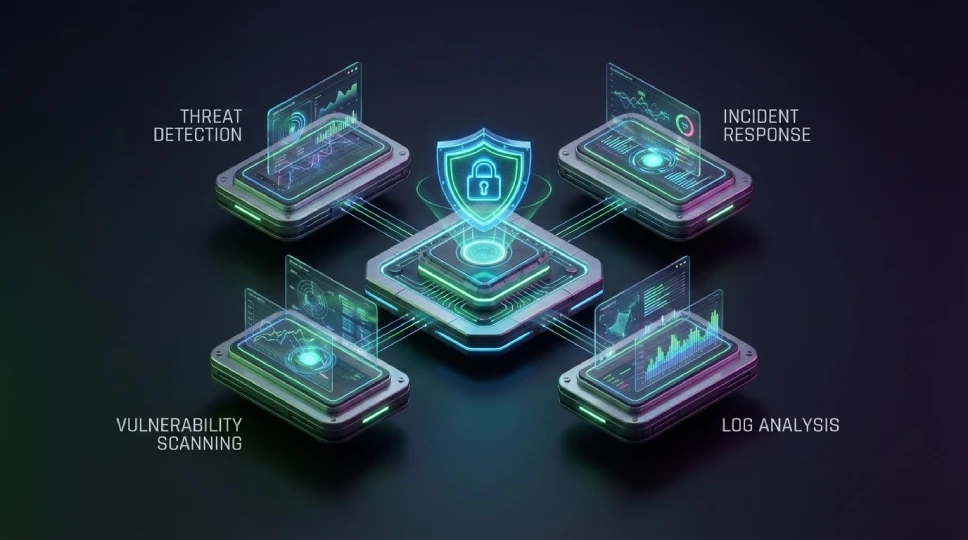
A cyber security analyst monitors systems for threats, validates alerts, investigates incidents, and coordinates remediation with IT and operations teams.
The analyst is the organisation’s early warning and response resource, responsible for parsing alerts, deciding what is actionable, and collecting evidence needed to contain or remediate a threat. Over time analysts help reduce noise by tuning detections, improving logging, and refining incident playbooks so the whole team becomes more effective.
- Monitor security alerts and triage them.
- Collect logs and forensic evidence for investigations.
- Coordinate containment and remediation with system owners.
- Maintain and tune detection rules and alert thresholds.
- Document incidents and lessons learned for continuous improvement.
What does a cyber security analyst do day to day in a SOC or security team?
Daily work includes reviewing alerts, triaging tickets, investigating confirmed incidents, coordinating fixes, and maintaining detection systems.
A typical shift begins by reviewing overnight alerts and prioritised tickets, then moves into focused investigation work and evidence collection. Analysts run searches, extract indicators, review endpoint and network telemetry, and then follow the incident playbook to contain or escalate issues as needed.
- Morning: review backlog and urgent alerts.
- Mid day: deep dive investigations and log correlation.
- Afternoon: remediation coordination and detection tuning.
- End of shift: write incident notes and handover open items.
Which SIEM, EDR and monitoring tools do entry-level cyber security analysts actually use?
Entry-level analysts commonly work with SIEM platforms, endpoint detection tools, vulnerability scanners, network telemetry, cloud logs, and ticketing systems to detect and investigate incidents.
Tool brands vary but the categories are consistent; mastering log interpretation and investigation workflow matters more than memorising vendor names. Recruiters will ask for examples of a log you analysed and the remediation you recommended.
- SIEM and log analytics: Splunk, ELK, QRadar.
- Endpoint detection and response: CrowdStrike, Microsoft Defender, Carbon Black.
- Vulnerability management: Nessus, OpenVAS, Qualys.
- Network telemetry: Zeek, Suricata, NetFlow analysis tools.
- Cloud logging: AWS CloudWatch, Azure Monitor, GCP Logging.
- Ticketing and collaboration: ServiceNow, Jira, Slack.
What networking, OS and scripting skills do employers expect from cyber security analysts?
Employers expect networking fundamentals, operating system log knowledge, and basic scripting to automate tasks and parse logs.
Start with TCP/IP, common protocols like DNS and HTTP, and how to interpret packet captures. Learn where Windows and Linux record events, how to query them, and practice writing small Python or Bash scripts to extract indicators or summarise log data.
- Networking basics: TCP/IP, ports, DNS resolution, HTTP flows.
- Operating systems: Windows event logs, Linux syslog, process and file traces.
- Scripting: Python or Bash for parsing logs and automating checks.
- Log analysis: pattern recognition, correlation, and context building.
- Communication: concise incident write ups and stakeholder updates.
Which certifications and training paths get you an analyst job in India?
Practical training with extended lab access combined with recognised certifications such as CEH or a broader cyber security certification helps, especially when you can show lab evidence.
Certifications are useful credibility signals, but hiring managers prioritise demonstrable skills. Choose programs that include simulated incident response exercises, timed practicals, and portfolio support so you can present one page lab summaries during interviews.
- Practical courses with labs and mock practicals.
- Certified Ethical Hacking and broad cyber security certification paths.
- Hands on platforms such as CyberQ or equivalent lab environments.
Relevant course references:
How do entry-level, mid-level and senior cyber security analyst roles differ in responsibilities?
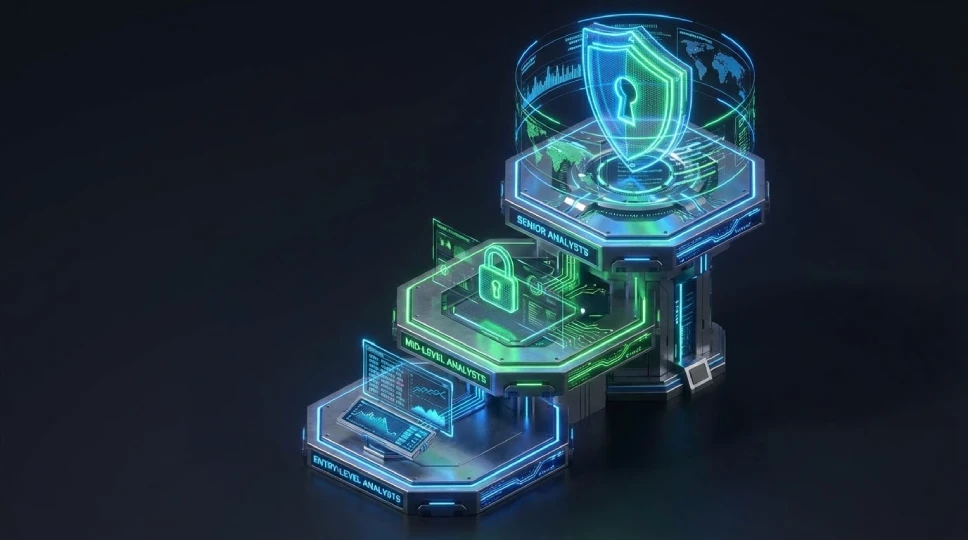
Entry analysts focus on monitoring and triage, mid-level analysts take on complex investigations and playbook ownership, and senior analysts design detection strategy and lead response operations.
Entry level roles are structured and supervised while mid level work requires cross source data correlation, root cause analysis, and detection tuning. Senior analysts set SOC priorities, lead complex incidents, and mentor junior staff.
- Entry: triage alerts, gather evidence, escalate as needed.
- Mid: lead investigations, author playbooks, optimise detections.
- Senior: strategy, cross team coordination, leadership and mentoring.
How much do cyber security analysts earn in India and what factors change pay?
Salary ranges in India are approximately ₹2.5–5 LPA for entry level, ₹5–12 LPA for mid level, and ₹12–25 LPA for senior roles, with variation by city, sector, and skills.
These ranges are approximate and should be validated against local listings. Employers in metros and sectors like finance and large enterprise typically offer higher pay. Specialisations such as cloud security, SIEM expertise, and EDR competence command premiums.
| Experience Level | Typical India Range (₹) | Key Pay Factors |
|---|---|---|
| Entry level | 2.5–5 LPA | Location, basic certs, lab portfolio |
| Mid level | 5–12 LPA | Investigation skill, cloud, SIEM experience |
| Senior | 12–25 LPA | Leadership, specialised skills, sector |
Which projects will a new cyber security analyst own in the first six months?
In the first six months you will manage routine alert queues, run vulnerability scans, assist investigations, tune detections, and participate in drills and documentation.
Early assignments are scoped to build judgment and capability: you will close low complexity alerts, help gather forensic artifacts, run scheduled scans, and assist with remediation tracking. These tasks provide evidence you can include in your job portfolio.
- Daily log reviews and closing routine alerts.
- Running vulnerability scans and prioritising findings.
- Assisting with evidence collection for incidents.
- Detection tuning to reduce false positives.
- Participation in tabletop and simulated incident response drills.
How should a student prepare (labs, CTFs, scripts) to get hired as an analyst?
Build networking and Linux foundations, complete at least 100 hours of hands on labs, learn basic scripting, and produce a portfolio of one page lab summaries and CTF write ups.
Combine structured theory with repeated practical exercises. Timed tasks improve your speed and accuracy, while a portfolio of concise lab summaries demonstrates your approach and impact to recruiters.
- Weeks 1–2: Networking essentials and packet basics.
- Weeks 3–4: Linux commands, Windows logs, and log parsing.
- Weeks 5–6: SIEM basics, EDR triage, vulnerability scanning.
- Weeks 7–8: Timed incident practicals, one page summaries, and mock interviews.
Target: 100+ hours of lab time, three timed practicals, and five one page lab summaries for your portfolio.
How do employers evaluate analyst candidates in interviews and what evidence wins offers?
Employers evaluate candidates by asking for lab walkthroughs, short triage exercises, and evidence of clear reporting and remediation thinking.
Interviewers look for a methodical approach: what data you collected, how you validated a finding, and what remediation you recommended. Prepare a concise two minute incident narrative and have one page lab summaries ready to share.
- Two minute incident story covering objective, steps, findings, remediation.
- One page lab summaries and links to any scripts you wrote.
- Practice parsing a short log sample and explaining conclusions in plain language.
What career paths follow analyst work: SOC lead, incident response or threat intel?
Analysts commonly progress to SOC lead, incident response specialist, threat intelligence roles, detection engineering, or security operations management.
Your next step depends on what you enjoy doing: deep investigations, automation and engineering, or people and process leadership. Build evidence early and pick a specialisation to accelerate movement into senior roles.
- Incident response engineer or forensics analyst.
- Threat intelligence analyst or malware researcher.
- Detection engineer or security automation specialist.
- SOC lead, operations manager, or security architect roles.
Can you become an analyst without a degree, which certfication to start with, and timeline?
You can often get an analyst role without a degree if you have demonstrable skills; start with a practical certificate such as CEH or a cyber security certification; expect 2–6 months of focused study to land an entry role.
Common student questions and quick answers:
- Is a degree required? Not always; demonstrable lab work and good interview performance can offset a missing degree.
- Which certification first? Choose a practical course with labs such as CEH or a certified cyber security certification program.
- How long to find a job? With focused practice and 100 hours of labs, many students secure entry roles in 2–6 months.
What exact next steps should Indian students take to become analyst-ready?
Follow a structured study plan, complete hands on labs, document every exercise with a one page lab summary, and practise mock interviews to present incidents clearly.
Next steps: pick a practical course or lab platform, commit to the 8 week plan above, complete 100+ hours of labs, and prepare five one page lab summaries for your portfolio. Book two mock interviews and refine your two minute incident narrative until it is concise and clear.
