

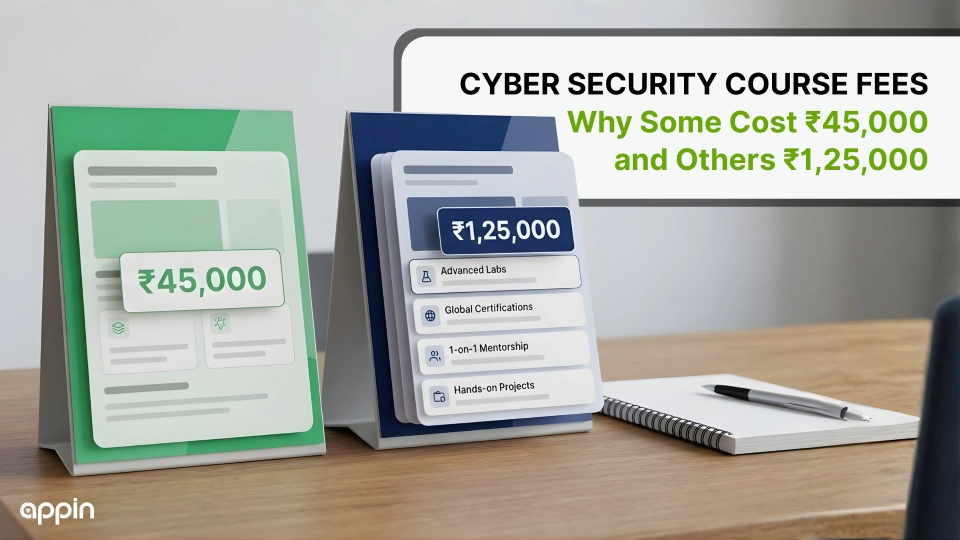
Why do cyber security course fees in India range from ₹45,000 to ₹1,25,000?
Cyber security course fees in India vary widely because programs differ in duration, depth, practical exposure, instructor seniority, included certification vouchers, and placement services. Students should compare the full list of inclusions and expected outcomes to judge which program represents real value for their career goals.
What determines cyber security course fees in India?
The primary reason fees differ is simple: not all programs deliver the same mix of learning, practice, and career support. High cost programs usually bundle several items that lower cost options do not.
- Curriculum breadth and depth. Courses that cover many modules such as networking, system hardening, web application testing, exploit development, and incident response will cost more.
- Practical lab infrastructure. Persistent cloud labs, virtual machines, and simulated enterprise networks have recurring hosting and maintenance costs. Programs that provide unlimited or long term lab access charge more to cover these expenses.
- Trainer experience and batch size. Courses taught by senior practitioners with small batch mentoring require higher trainer pay and therefore higher fees.
- Official certification vouchers and exam prep. Programs that include vouchers for exams like CEH or other vendor certifications add to the cost. Proctored mock tests and official prep materials increase fees further.
- Placement support and hiring partnerships. Dedicated placement teams, resume clinics, mock interviews, and hiring drives are expensive to run and increase the program price.

Typical fee ranges by course type and what you get
Understanding where different course types sit on the price ladder helps you pick what matches your needs.
- Short certificate courses (roughly ₹30,000 to ₹60,000): These teach a focused skill such as introductory penetration testing, basic network security, or an essentials module. They usually provide limited lab hours, larger batch sizes, and minimal placement help.
- Diploma and job ready programs (roughly ₹60,000 to ₹95,000): These include more lab time, multiple modules, project work, and some placement assistance. They are designed to move a candidate from beginner to job ready in a defined timeframe.
- Professional certification tracks (roughly ₹95,000 to ₹1,25,000): These are career oriented bundles that include multiple certifications, personalized mentorship, extended lab access, capstone projects, and strong placement support with verified hiring partners.
What higher priced courses include and why they cost more
A higher price is often justified when the course offers services and experiences that materially increase your chance of employment and long term career growth.
- Extensive hands-on labs. Access to cloud hosted labs, realistic enterprise scenarios, and live targets requires continuous infrastructure costs.
- Capstone projects and portfolio building. One to one project time with instructors to produce a pentest report or an incident response case study is highly valuable but time intensive for trainers.
- Certification vouchers and official resources. Buying exam vouchers and licensed study material on behalf of students is an upfront cost that many premium programs absorb.
- Small batch mentoring. Low student to trainer ratios mean more personalized feedback and practical corrections during labs. This raises trainer workload and program cost.
- Active placement networks. Running hiring drives, coordinating employer interviews, and offering career coaching requires a dedicated operations team.
How to compare course inclusions rather than price alone
Headline price can be misleading. Compare the components and estimate the actual value delivered.
- Lab hours and duration of access. More lab hours and longer access periods provide more practice time after classes end.
- Number and type of projects. Projects that result in a portfolio you can show to employers significantly increase employability.
- Certification vouchers included. A course that includes at least one reputable certification voucher usually justifies a higher fee.
- Placement metrics. Verified placement percentages, average starting salaries, and recent employer names are key signals of program effectiveness.
- Post course support. Access to doubt clearing, alumni communities, or extended mentorship after course completion matters for long term learning.
Illustrative fee breakdown for a mid tier program
This simple, approximate split shows where money typically goes inside a career program.
- Trainer fees and curriculum design: 25%
- Lab infrastructure and cloud access: 30%
- Placement operations and employer coordination: 15%
- Certification vouchers and exam support: 10%
- Marketing, admin, and overhead: 20%
How placement outcomes affect course value and payback time
A program that helps you land a job quickly can justify a higher fee because it shortens time to earning and speeds up return on investment.
- Compare expected salary after completing the program against the fee to estimate payback months. For example, if average starting pay is ₹3.6 lakh per year and program cost is ₹90,000, the gross first year payback is measurable within a few months of employment.
- Look for programs that show recent hires, role titles, and salary ranges rather than vague placement promises.
- Ask about employer types: managed security service providers, product companies, finance firms, and government contractors all hire differently and offer different salary bands.
Specific inclusions that change the price materially
Some features are especially expensive for providers and therefore raise the course fee significantly.
- Live target access and lab maintenance. Running live web targets and vulnerable apps that reset for each student requires engineering effort.
- One to one mentorship hours. Time with an experienced consultant is costly. Even a few hours per student increases the price.
- Proctored exam vouchers. Official exam fees can be a direct cost passed onto the student or included by premium programs.
- Career placement drives and employer outreach. Building and maintaining employer relationships is labor intensive.
When a lower fee program makes sense for you
Lower fee options are appropriate in several cases and can be a smart starting move.
- You only need skill refreshers. If you already have IT basics and only need training on a particular tool or technique, a short course is cost effective.
- You want to test the field first. A focused, low cost program helps validate interest before investing in a longer career track.
- You can self-study some parts. If you are disciplined and can pair a cheap course with self practice, you can lower overall spend.

When the higher fee is worth it for freshers
Pay more when the program meaningfully increases your employability and reduces job search risk.
- It includes a set of recognized certifications and exam vouchers.
- It provides a capstone project or portfolio piece you can show employers.
- It offers verified placement support with hiring partners and mock interviews that build real interview readiness.
Red flags to watch for before you pay a high fee
Some warning signs should make you pause and ask for evidence before enrolling.
- Absence of transparent placement statistics or unverifiable success stories.
- No clear information about lab platforms, lab hours, or project scope.
- Large batch sizes with promises of individual mentoring that are not backed up with details.
- Heavy marketing language and vague guarantees instead of hard data.
How to finance or reduce initial cost pressure
There are several practical ways to afford a higher priced program without paying the full amount upfront.
- EMI and installment plans. Many institutes provide monthly payment options that spread the cost.
- Scholarships or early bird discounts. Check whether the provider offers need based or merit based support.
- Employers supported training. Some companies sponsor training once they hire you or provide reimbursement after a probation period.
- Laddered learning. Start with a short course and then upgrade to a diploma or certification track once you confirm fit and progress.
Practical checklist to use before you enroll
A short structured checklist will surface key differences between programs quickly.
- Confirm lab hours and how long labs remain accessible after course end.
- Verify which certification vouchers, if any, are included in the fee.
- Ask for recent placement statistics with role titles and salary ranges.
- Request a demo lab or sample lesson to test teaching style and lab quality.
- Review alumni projects or ask to see sample capstone outputs.
Realistic expectations on salary and job roles for freshers
Knowing what entry level roles pay and what employers expect helps you evaluate course ROI.
- Entry SOC analyst, junior pentester, or vulnerability assessor roles often represent realistic first jobs for freshers.
- Entry salaries vary by city and employer, but many freshers start in the ₹2.5 lakh to ₹5 lakh annual bracket depending on role and location.
- Some specialized jobs at product companies or multinational firms may start higher but usually require stronger portfolios or internships.
Final thoughts and recommended next steps
Higher fee does not automatically mean better outcome, and lower fee does not automatically mean poor quality. Focus on the specific inclusions that matter for your target role, especially lab access, portfolio building, mentoring, and placement support.
Compare three programs that represent different price points: a short focused course, a diploma with placement support, and a professional certification track. Evaluate the expected starting salary and time to job for each, and choose the path that best matches your experience, learning style, and career timeline.
