


Understanding cyber security course fees in India lets you compare programs, budget correctly, and pick training that leads to jobs rather than just certificates.
Course costs for cyber security vary widely depending on the level, delivery mode, and services included, and understanding cyber security course fees in India is the first step to choosing the right programme.
Students often focus only on the sticker price and miss the extra value items such as lab hours, exam vouchers, mentorship, and placement support. This article explains what drives fees, common price ranges, how to budget as a fresher, and how to assess return on investment.
What factors determine cyber security course fees?
Course fees are shaped by curriculum depth, lab access, instructor quality, and placement support.
Program format matters: instructor led classroom courses cost more than purely self paced online lessons. Extensive cloud labs and virtual machines raise operational costs, while official certification alignment often adds licensing fees. Institutes that market strong placement statistics usually include interview coaching and recruiter connects, which also raises the price.

How much do different types of cyber security courses cost?
Fees range from low cost short courses to expensive advanced programmes with placement guarantees.
Short awareness or introductory courses are the most affordable option and are useful for building basic knowledge. Job oriented bootcamps and diploma programmes sit in the middle band and focus on practical skills. Certification aligned courses and end to end placement programmes occupy the higher band because of included exam vouchers, mock tests, and extended career support.
| Course Type | Typical Fee Range (INR) | Common Inclusions |
|---|---|---|
| Short online courses | 5,000 – 25,000 | Recorded lessons, limited labs, certificate of completion |
| Bootcamp / diploma (job oriented) | 25,000 – 90,000 | Live labs, projects, basic placement help |
| Certification prep (e.g., CEH) | 50,000 – 1,50,000 | Official material, practice tests, exam vouchers |
| Advanced programmes with placement | 1,00,000 – 2,50,000+ | Extended mentorship, guaranteed interviews, hiring drives |
What does an ethical hacking or CEH course cost?
Ethical hacking and CEH aligned courses usually cost more because they include official curriculum and exam access.
Many institutes advertise certified ethical hacking training or CEH readiness; the extra cost reflects official content licensing and, sometimes, an included exam voucher. If you are aiming for industry recognition, confirm whether the fee includes the certification exam, practice labs, and vendor authorised material.
Are online courses cheaper than classroom courses?
Online courses are generally cheaper, but value depends on lab access and mentoring quality.
Self paced online lessons are useful for theory learning, but hands on practice is essential for employability. A low fee online course without live labs may save money up front but will slow down job readiness. Blended models that add scheduled lab time and mentor sessions often provide better outcomes for a moderate price increase.
What do fees usually cover and what are extra costs?
Fees typically cover tuition, access to course material, and a fixed number of lab hours; exam vouchers and extended support are often extra.
- Usually included: lectures, basic lab access, and a certificate of completion.
- May be extra: certification exam fee, extended lab hours, one on one mentorship, and interview guarantees.
- Optional costs: additional software licences, physical lab equipment, and travel for in person sessions.
How should a fresher budget for cyber security training?
A fresher should budget for course fees, certification attempts, a simple home lab, and job search expenses.
Here is a sample budgeting plan for a focused one year plan that aims at job readiness.
| Item | Estimated Cost (INR) | Notes |
|---|---|---|
| Bootcamp or diploma | 40,000 – 90,000 | Includes labs and projects |
| Certification exam(s) | 10,000 – 40,000 | CEH, CompTIA Security, or others |
| Home lab and tools | 5,000 – 15,000 | Router, VM hosting, basic tools |
| Interview prep and travel | 5,000 – 15,000 | Mock interviews, profile building |
Altogether a practical fresher budget is roughly 60,000 to 1,50,000 rupees, depending on the course and certification choices.
Are there low cost options that still lead to jobs?
Yes, targeted practical courses such as bug bounty programmes and project based diplomas can be affordable and job oriented.
Short focused courses teach specific skills and help build a portfolio that recruiters value. Combine free resources for theory with a low cost bootcamp that provides lab access and project mentoring to keep costs reasonable while staying employable.
How to evaluate value for money in a course?
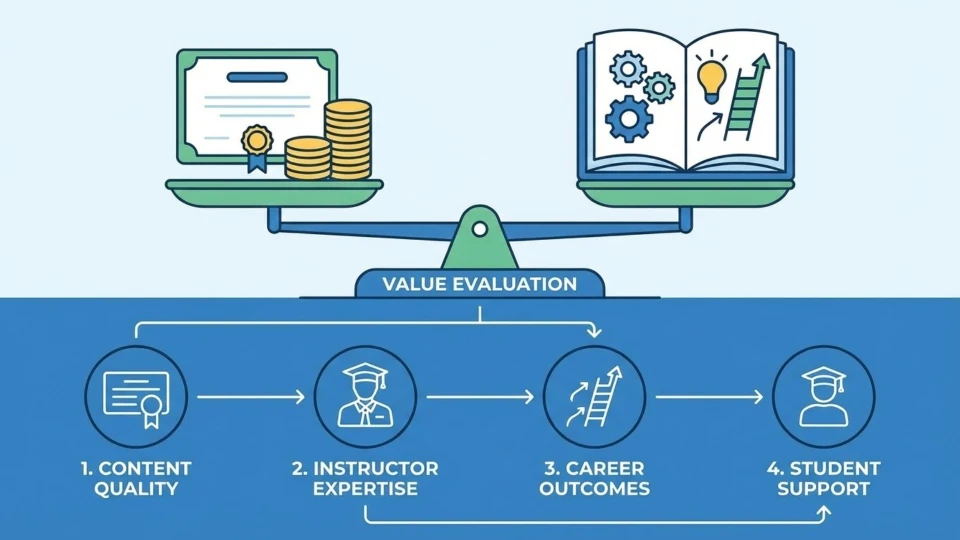
Evaluate value by checking lab hours, instructor experience, placement outcomes, and the opportunity to build a portfolio.
- Ask for sample projects and alumni work to judge practical depth.
- Confirm the number of live lab hours and if virtual machines are provided.
- Request placement conversion rates and sample employer names.
- Check whether the course includes resume building, mock interviews, and hiring drives.
Do institutes offer financing, scholarships, or EMI options?
Many institutes provide EMI, education loans, and scholarships to reduce upfront payment pressure.
Always read the financing terms carefully and check for any processing fees. Scholarships are sometimes offered for meritorious students or early applicants, and some providers also run periodic discounts or group offers.
What is the likely return on investment and salary expectations?
Entry level cyber security roles for freshers typically start between ₹2.5 lakh and ₹6 lakh per year, with rapid growth possible after 2 to 4 years of experience.
Roles such as security analyst, SOC analyst, and junior penetration tester are common entry points. Return on investment improves when the course helps you secure a job quickly and when you continue building certifications and practical experience.
Frequently asked questions
Is a more expensive course always better?
No, the true indicator is hands on training, mentor support, and placement outcomes rather than price alone.
How many certifications should a fresher aim for?
Start with one recognised certification after gaining practical experience, then add specialised certificates as you progress.
Can I learn cyber security for free and still get a job?
Free materials can help build a foundation, but structured labs, projects, and mentor feedback accelerate job readiness and are often worth the investment.
Understanding cyber security course fees in India helps you make a measured decision that balances upfront cost with employability outcomes.
Prioritise programs that offer sustained lab access, real projects, and clear placement support. Budget realistically, verify inclusions such as certification vouchers and interview coaching, and aim for a course that helps you build a portfolio employers can evaluate. The right training, combined with continued practice, can convert your investment into a strong career start in cyber security.
