

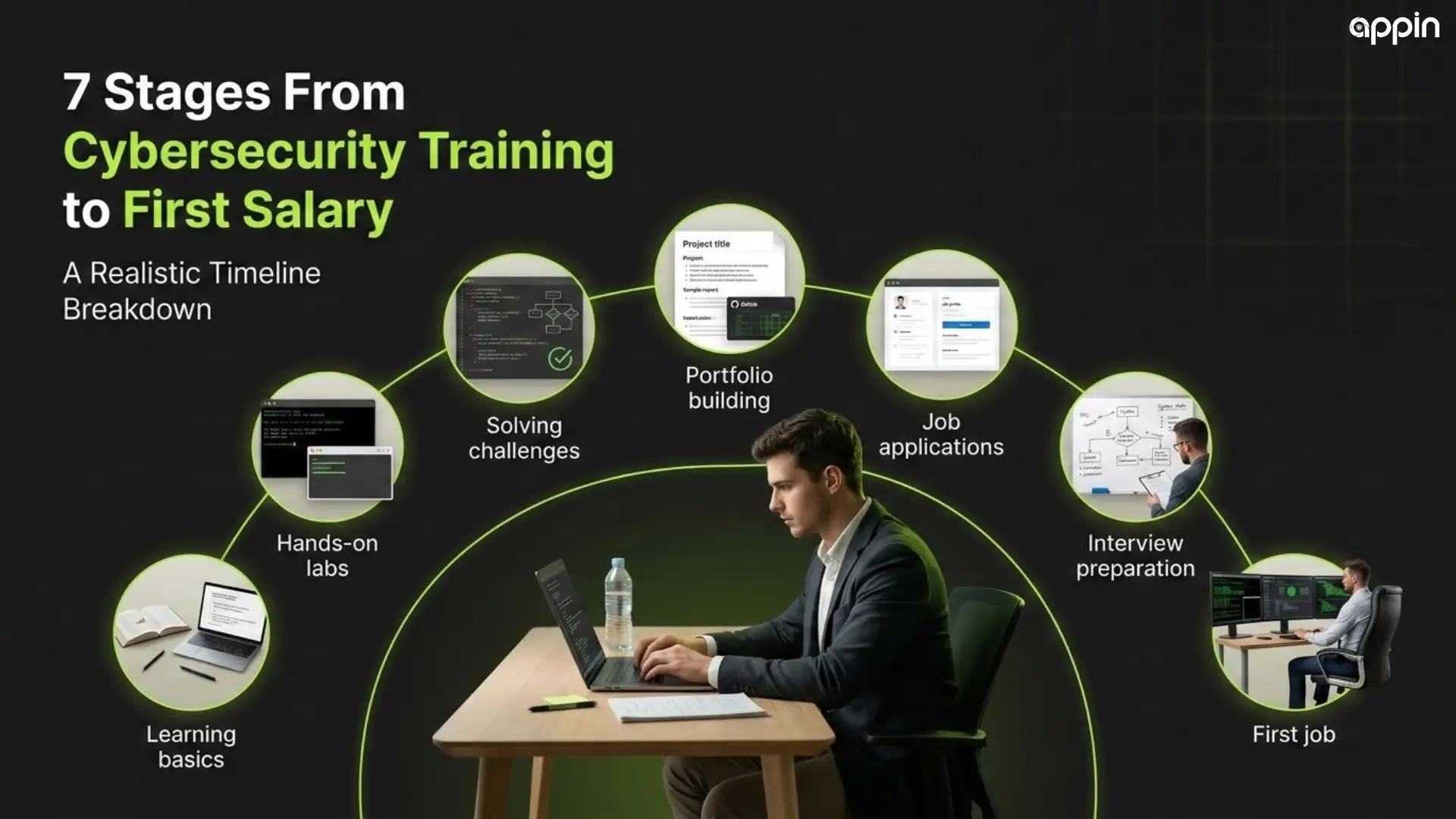
What Are the 7 Stages From Cybersecurity Training to First Salary in a Realistic Timeline?
The cybersecurity training to first salary journey takes most people between 12 and 18 months from zero experience. BLS data shows 29 percent projected job growth for information security analysts through 2034, with roughly 16,000 openings each year in the United States. ISC2 reports 4.8 million unfilled security roles worldwide. That massive gap means employers actively need trained people, making this career path one of the most rewarding in tech today.
The journey from cybersecurity training to first salary includes learning basics, building skills, practicing, creating a portfolio, applying for jobs, clearing interviews, and starting the first role. Each stage builds on the last one and together they form a clear roadmap from beginner to employed professional.
Stage 1: Learning Cybersecurity Basics
Start with core concepts like networking, operating systems, and basic security principles. This first stage is about building a strong foundation before you move into advanced topics.
This stage focuses on understanding how computers and networks work. You need to grasp the basics before you can protect systems. Most beginners spend 2 to 3 months on this step.
Key Topics to Cover
- Networking fundamentals like IP addresses, ports, and protocols
- Linux command line basics and file system navigation
- Core security concepts such as the CIA triad
- How firewalls, antivirus tools, and VPNs work
Applied Technology Academy research found that people with zero tech background need 6 to 12 months for full foundational learning. Those with some IT experience can shorten this to 4 to 8 months.

Stage 2: Building Practical Skills
Focus on hands on skills through labs and real scenarios. Reading about security is not enough. You need to touch real tools and solve real problems to build confidence.
Platforms like TryHackMe have grown to over 5 million registered users because practical learning works better than watching videos alone. Dedicate at least 10 hours per week to lab work during this stage.
Activities to Start With
- Complete guided labs on TryHackMe or similar platforms
- Practice basic tools like Nmap and Wireshark
- Set up a virtual lab environment on your own computer
- Follow along with beginner friendly security exercises
TryHackMe reports 489,000 monthly searches showing strong demand for interactive security training. Consistent practice beats occasional long study sessions every time.
Stage 3: Practicing Through Projects and Labs
Apply skills by solving real problems and documenting your work. This stage moves you from guided tutorials to independent problem solving.
Capture the flag challenges and vulnerability exercises test what you have learned so far. ISC2 found that 90 percent of cybersecurity teams report skills gaps, so employers want people who can demonstrate practical ability.
Ways to Practice
- Complete capture the flag challenges on Hack The Box
- Find and document vulnerabilities in practice systems
- Write detailed reports explaining your approach and results
- Contribute to open source security projects on GitHub
Document everything you do. Screenshots, notes, and written reports become proof of your skills when you apply for jobs later.
Stage 4: Creating a Cybersecurity Portfolio
Build a portfolio that shows your practical work and problem solving ability. A strong portfolio separates you from other entry level candidates who only have certifications.
Your portfolio is proof that you can do the work, not just talk about it. Recruiters and hiring managers look for candidates who can show real projects and documented lab results.
What to Include in Your Portfolio
- GitHub projects from labs and challenges you completed
- Documented lab results with clear screenshots and notes
- Security reports you wrote during practice exercises
- A personal blog with technical write ups about your learning
Keep your portfolio public, updated, and linked on every job application. A well organized GitHub profile can make the difference between getting an interview and getting ignored.
Stage 5: Applying for Entry Level Cybersecurity Jobs
Start applying for roles like SOC analyst or junior security analyst. CyberSeek reports over 514,000 cybersecurity job openings in the US over the past 12 months, with a supply ratio of only 74 percent.
That means demand still outpaces available workers. ZipRecruiter data shows entry level SOC analysts earn an average of $57,761 per year in the US.
Application Tips to Follow
- Tailor your resume for each security role you target
- Apply to 10 to 15 positions per week as a minimum
- Attend local security meetups and virtual conferences
- Connect with hiring managers and recruiters on LinkedIn
- Target government, healthcare, and managed service providers
Government agencies and healthcare organizations often hire entry level talent because they face the biggest security staffing shortages.
Stage 6: Clearing Interviews and Technical Tests
Prepare for interviews by revising basics and practicing common questions. Security interviews often include both technical tests and behavioral questions.
Employers want to see how you think through problems, not just whether you memorize answers. Having the CompTIA Security+ certification gives you a clear advantage during this stage.
Preparation Steps
- Practice answering common technical questions out loud
- Run through mock interview scenarios with a friend
- Review networking basics and common security frameworks
- Prepare specific examples from your portfolio to discuss
The CompTIA Security+ has roughly a 60 percent first time pass rate according to Cyber Skills Centre. Beginners typically need 8 to 12 weeks of study at 5 to 10 hours per week to prepare.

Stage 7: Getting Your First Salary in Cybersecurity
Secure your first job and begin working in real security environments. This final stage is where training meets reality.
Your first role might be a SOC analyst, security help desk, or junior security analyst position. BLS reports the median annual wage for information security analysts at $124,910. Your starting salary will be lower but growth comes quickly with experience.
What to Expect in Your First Role
- On the job learning under senior team members
- Monitoring security alerts and responding to incidents
- Writing reports and documenting your findings
- Building relationships with other IT teams
Getting your foot in the door matters more than starting salary. Once you have real experience, your earning potential increases rapidly.
Common Challenges Along the Way
Breaking into cybersecurity is not instant. Some people face setbacks like failing certification exams or getting rejected in interviews. The CompTIA Security+ has only a 60 percent first time pass rate, meaning nearly half of test takers need multiple attempts.
Job hunting can take longer than expected for career changers with no prior IT background. H2K Infosys reports that most people begin entry level security work within 3 to 6 months after finishing structured training. Building a timeline around 12 to 18 months instead of 3 to 6 months sets realistic expectations and reduces frustration.
Burnout is another real challenge. Studying 10 to 15 hours per week for months requires discipline. Taking breaks, joining study groups, and celebrating small wins keeps motivation high throughout the journey.
Key Takeaways
- The full journey from zero experience to first salary typically takes 12 to 18 months.
- Practical skills matter more than theory, so invest time in labs and projects.
- A documented portfolio gives you a major edge over other entry level candidates.
- Over 514,000 security job openings exist in the US, showing strong demand.
- Entry level SOC analysts earn around $57,761 per year on average.
- Certifications like Security+ boost your chances during applications and interviews.
