

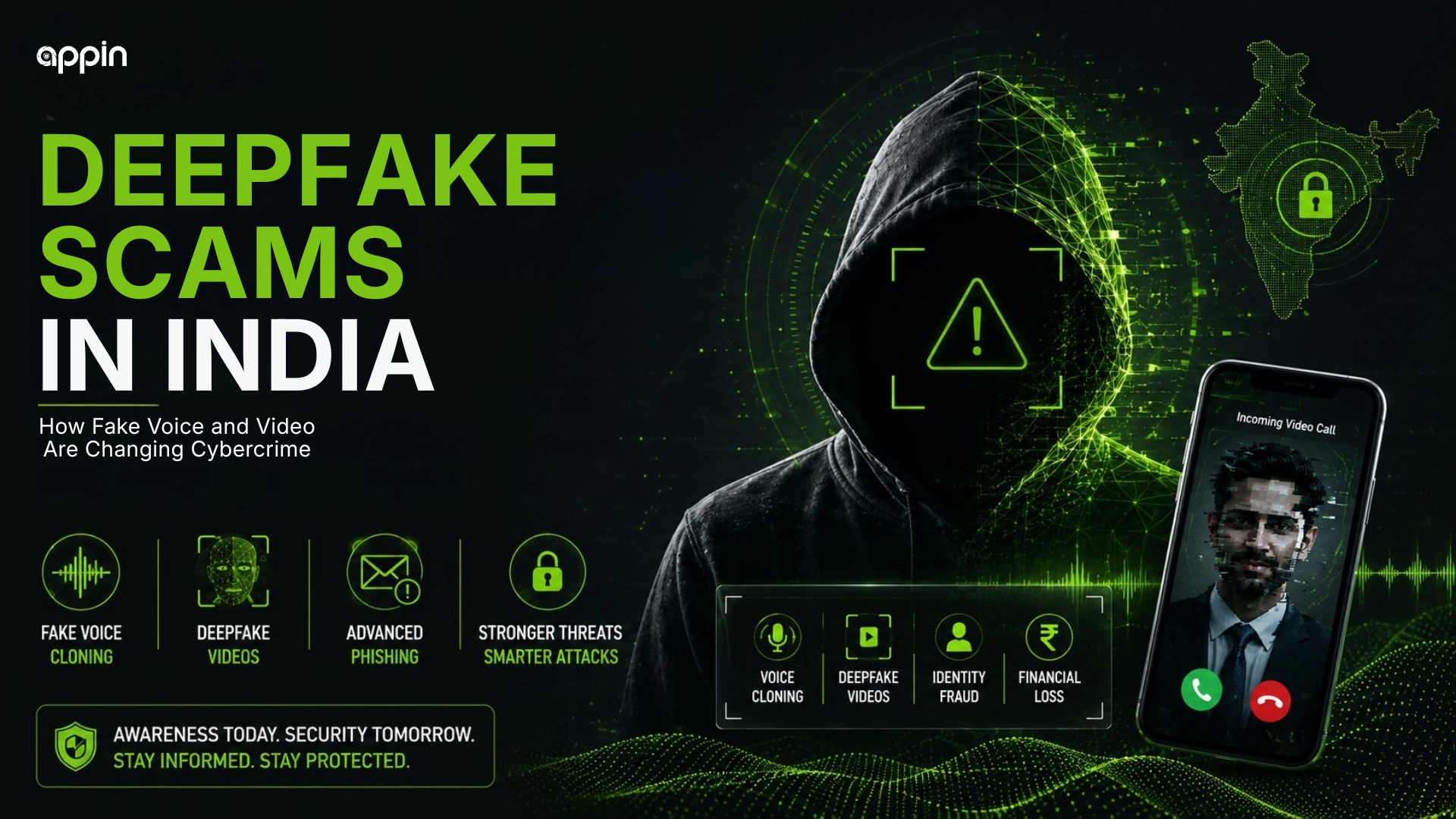
Why Deepfake Scams Are Becoming a Real Cybersecurity Concern
Deepfake scams in India are becoming dangerous because criminals can now use fake voice and video to make fraud look personal, urgent, and believable.
Imagine getting a WhatsApp video call that looks like your boss, parent, friend, or college senior. The face looks real. The voice sounds familiar. The message says, “Send money now,” “Share the OTP,” or “Approve this payment quickly.”
This blog explains how fake voice and video scams work, how to identify warning signs, what to do if you are targeted, and how cybersecurity learning helps students understand this new form of cybercrime.
What are deepfake scams in India?
Deepfake scams in India are cyber frauds where criminals use AI generated voice, video, or images to impersonate real people and trick victims.
A deepfake is fake media created or changed using AI. It may copy someone’s face, voice, expression, or identity.
These scams can be used to ask for:
- UPI transfers
- OTPs
- Passwords
- Documents
- Payment approvals
- KYC details
- Confidential files
Deepfake scams are different from normal fake messages because they attack trust. A fake text may look suspicious, but a familiar face or voice can feel real.
How do fake voice and video scams work?
Fake voice and video scams in India work by copying someone’s identity and using urgency, fear, or trust to make the victim act quickly.
A scammer may collect public videos, reels, interviews, voice notes, or social media clips. Then AI tools can create a cloned voice, edited video, or fake identity.
A common flow looks like this:
- The scammer collects public audio or video.
- AI creates a fake voice or video.
- The victim receives a call, note, or message.
- The scammer creates panic or urgency.
- The victim is asked for money, OTP, or approval.
- The fraud works because the identity looks familiar.
This is how deepfake scams work in simple terms. The technology creates trust, and the scam uses pressure.
Why are deepfake scams becoming more dangerous in India?
Deepfake scams are becoming more dangerous because AI tools are easier to access, digital payments are instant, and people trust familiar voices quickly.
India has a large base of WhatsApp users, UPI users, social media creators, students, parents, business owners, and employees. This creates many opportunities for impersonation.
AI scams India risks are growing because:
- Public videos are easy to collect
- Voice samples are available online
- UPI transfers happen quickly
- Families trust voice calls
- Employees trust manager instructions
- Fake content spreads fast
- Verification habits are weak
The problem is not only technology. The bigger issue is how quickly people react under pressure.
What are the common types of deepfake scams in India?
Common deepfake scams include fake family emergency calls, boss impersonation, investment videos, digital arrest threats, KYC fraud, and fake celebrity endorsements.
AI deepfake fraud examples can include:
- A fake voice of a child asking parents for urgent money
- A fake manager asking finance to approve payment
- A fake video of a celebrity promoting an investment app
- A fake authority figure threatening “digital arrest”
- A fake KYC call asking for face verification
- A fake job interview asking for documents or fees
- A fake vendor message changing bank details
These scams work because they combine technology with emotion.
How do deepfake voice scams target families?
Deepfake voice scams target families by copying the voice of a child, relative, or friend and creating panic through an emergency story.
An AI voice scam may sound like, “Papa, I am in trouble,” or “Please send money now, do not tell anyone.” The scammer may mention police, hospital, accident, hostel trouble, or an urgent fee.
Families can reduce risk by using:
- A family code word
- Callback verification
- A second family member confirmation
- A rule to never transfer under panic
- A saved number check
Fake video and audio scams often become more dangerous when attackers use cloned voices to sound like a boss, parent, or trusted person. voice cloning scams
How do deepfake video scams target businesses?
Deepfake video scams target businesses by impersonating senior leaders, clients, or vendors to approve payments or share sensitive information.
A fake video call scam in India may target a finance employee, HR team, vendor manager, or founder. The attacker may say the payment is urgent and confidential.
Business deepfake fraud may involve:
- Fake CEO video calls
- Fake manager voice notes
- Vendor bank detail changes
- Confidential file requests
- Payroll manipulation
- KYC or onboarding fraud
In India, deepfake scams can also connect with payment fraud, where the fake message pushes victims to transfer money quickly through UPI. UPI fraud and cybersecurity
What warning signs can help identify deepfake scams?
Deepfake scam warning signs include urgent money requests, unusual voice rhythm, poor lip sync, secrecy, and refusal to verify through another channel.
Watch for these red flags:
- Urgent UPI or bank transfer request
- Request for OTP, password, or document
- Strange pauses in voice
- Robotic tone
- Lips not matching speech
- Blurry face edges
- Unusual eye movement
- New number claiming to be known person
- “Do not tell anyone” pressure
- Refusal to call from a saved number
A fake video scam does not always look perfect. The safest response is verification, not guessing.
How can you verify a suspicious deepfake voice or video?
You can verify a suspicious deepfake by stopping the conversation, calling the person on a trusted number, and checking the request through another channel.
Use this simple process:
- Pause before paying.
- Call the real person on a saved number.
- Ask a private verification question.
- Confirm with another family member or manager.
- Do not share OTPs or passwords.
- Save screenshots and call details.
- Report suspicious activity if needed.
If someone pressures you to act immediately, treat that as a warning sign.
How can organizations protect themselves from deepfake enabled fraud?
Organizations can protect themselves by using payment controls, callback verification, staff awareness, access limits, and incident reporting workflows.
Deepfake fraud often succeeds when one person can approve sensitive action alone. Businesses should reduce that risk.
Important controls include:
- Multi person approval for payments
- Callback checks for urgent requests
- Vendor bank detail verification
- Clear video and voice verification policy
- Employee awareness training
- Restricted access to sensitive data
- Incident response process
- Security monitoring
As AI tools become easier to access, students should also understand why AI systems themselves need security controls. AI agent security
What should you do if you become a victim of a deepfake scam?
If you become a victim, act quickly by contacting your bank, reporting the fraud, saving evidence, and changing compromised passwords.
Do not delete evidence in panic. Save everything that can help investigation.
Steps to take:
- Call your bank or payment provider immediately
- Report cyber financial fraud through 1930
- File a complaint on the National Cyber Crime Reporting Portal
- Save numbers, screenshots, transaction IDs, and call records
- Change passwords
- Revoke suspicious app access
- Inform your workplace or family if identity was misused
Fast reporting can improve the chance of freezing fraudulent transactions.
Why is deepfake detection difficult for normal users?
Deepfake detection is difficult because modern AI can create realistic voices, faces, expressions, and speaking styles.
Normal users are not trained to inspect video frames, audio patterns, or face movement. Scammers also use emotional pressure, so the victim may not think calmly.
This is why verification habits matter more than confidence. Instead of asking “Does this look fake?” ask “Can I verify this request safely?”
What does deepfake cybercrime teach cybersecurity students?
Deepfake cybercrime teaches students that modern cybersecurity is not only about viruses and passwords, it also includes identity fraud, social engineering, and digital investigation.
Deepfake cybercrime explained for students connects many topics:
- Social engineering
- Voice cloning risk
- OSINT misuse
- Phishing and impersonation
- Incident response
- Digital forensics basics
- Security awareness
- AI risk in cybersecurity
This is why deepfake scams and cybersecurity are now closely connected.
How does learning cybersecurity help fight deepfake scams?
Learning cybersecurity helps students understand how scams are planned, how identities are misused, how evidence is collected, and how people can defend themselves.
Students can learn how to identify suspicious links, secure accounts with two factor authentication, understand social engineering, and support awareness programs.
Career paths connected to this topic include:
- SOC analyst
- Cyber forensics assistant
- Incident response analyst
- Ethical hacking learner
- Security awareness trainer
- Threat intelligence beginner
If you are asking how students can learn deepfake detection, the answer starts with cybersecurity basics, social engineering awareness, and safe investigation practice.
How can Appin help students learn about deepfake scams and cybercrime?
Appin helps students learn cybersecurity through hands-on training, authorized training labs, defensive cybersecurity concepts, cybercrime awareness, real tools, and responsible investigation practices.
At Appin Indore, learners build practical understanding of cyber threats, social engineering, account security, incident response basics, ethical testing rules, and safe evidence handling.
Students can explore CEH v13, CHFI, Bug Bounty Diploma, Diploma in Information Security, and the 6 month Diploma in IT Security and Ethical Hacking.
Appin Technology Lab also provides career guidance and placement assistance for students and freshers who want to build cybersecurity careers through legal, defensive, and job focused learning.
What Students Should Remember About Deepfake Cybercrime
Deepfake scams in India show how cybercrime is becoming more personal and believable.
Fake voice and video can make victims trust the wrong person, transfer money, share data, or approve sensitive actions. The best defense is not panic. It is verification, awareness, strong account security, and cybersecurity learning.
Start your cybersecurity journey with Appin Indore and learn how modern cybercrime works through practical labs, real tools, ethical hacking concepts, authorized training labs, defensive cybersecurity concepts, and expert guidance.
