

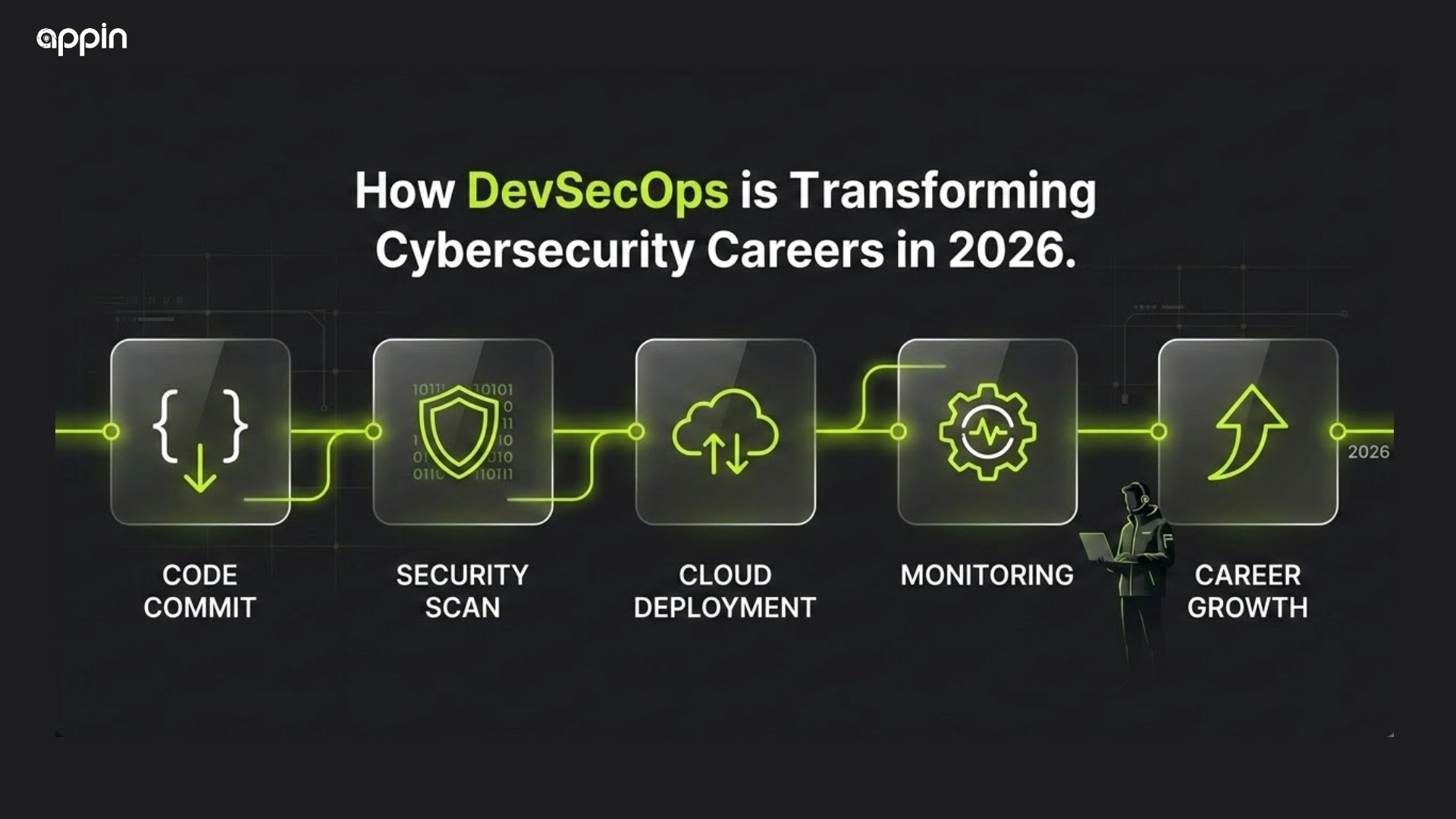
How DevSecOps Jobs Are Transforming Cybersecurity Careers in 2026
How DevSecOps Jobs Are Reshaping the Cybersecurity Workforce
DevSecOps jobs combine development, security, and operations to create roles that secure applications throughout the entire software lifecycle. This approach has created massive demand for professionals who understand code, cloud infrastructure, and security testing simultaneously.
The global DevSecOps market reached $10.1 billion in 2025 and is projected to hit $31.96 billion by 2034 according to Fortune Business Insights. Understanding what is DevSecOps for beginners starts with one simple idea: security gets built into every step of creating software instead of being checked only after everything is finished. This shift has opened thousands of DevSecOps jobs that blend technical development skills with security expertise.
Key points:
- The DevSecOps market is growing at 13.65% CAGR through 2034
- 36% of organizations now develop software using DevSecOps practices
- Asia Pacific is the fastest growing region for DevSecOps adoption at 22.7% CAGR
- Average DevSecOps engineer salary in the US reached $183,645 per year in 2026 (Glassdoor)

Why Are Companies Adopting DevSecOps in 2026?
Companies adopt DevSecOps because it enables secure software development without slowing down release cycles. Rising cyberattacks and stricter regulations make traditional security approaches impractical for modern development speeds.
Regulatory pressure plays a major role in adoption. The US Executive Order 14028 and Europe NIS2 directive require organizations to integrate security controls into delivery pipelines rather than relying on downstream audits according to Mordor Intelligence. Cloud migrations have added urgency because traditional perimeter security no longer protects applications running across distributed environments. Four out of five CIOs are increasing cybersecurity budgets, which reached $5.1 trillion globally in 2024 (Splunk).
Key points:
- Quarterly security gates cannot keep pace with daily or hourly code deployments
- 97% of organizations are using or planning to use AI in the software development lifecycle (GitLab)
- 48% of the DevSecOps market is driven by cloud native applications
- Enterprises need continuous compliance to meet regulatory requirements
How Does DevSecOps Change Traditional Cybersecurity Roles?
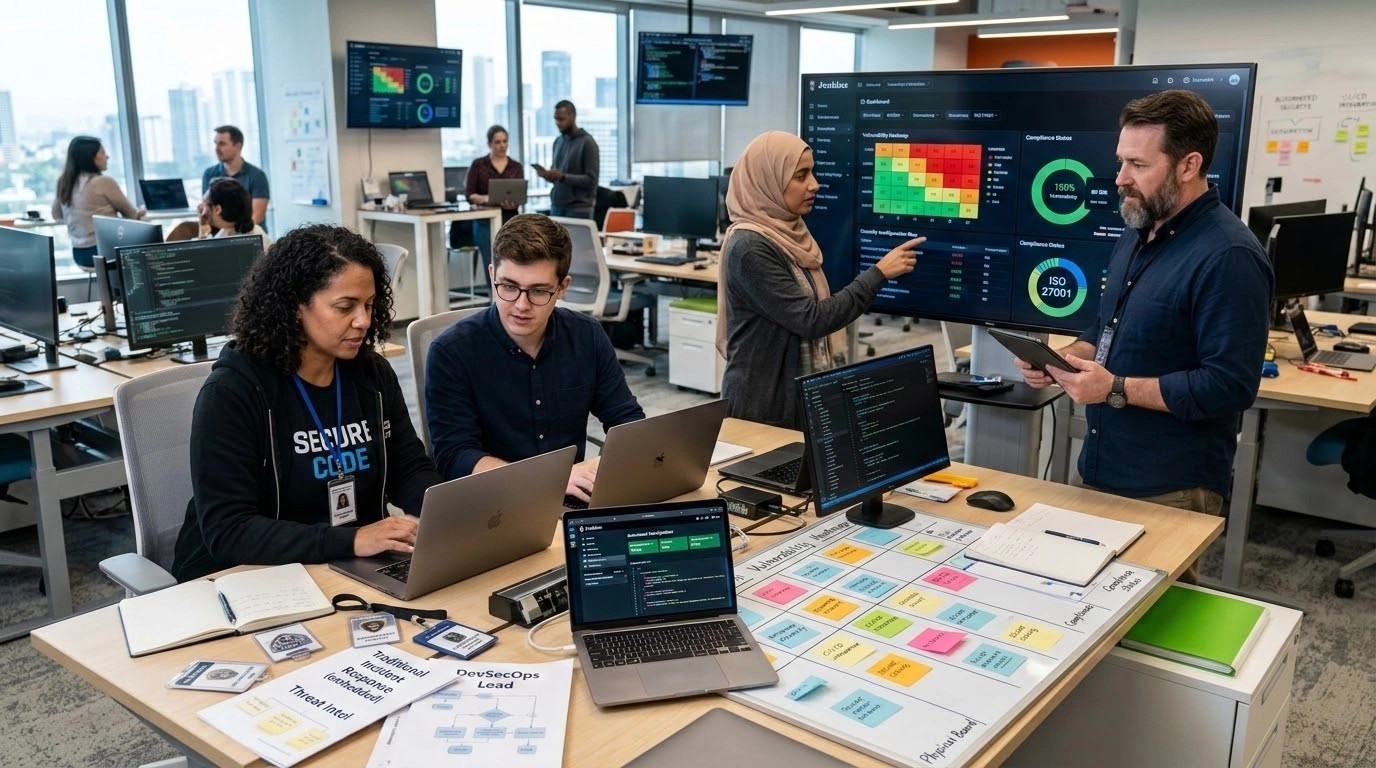
DevSecOps vs traditional security roles reveals a fundamental shift in how cybersecurity professionals work. Security teams move from acting as gatekeepers who review code after development to becoming collaborators embedded directly into development workflows.
Security professionals now work alongside developers and operations teams from the start of every project. Instead of running manual penetration tests at the end of a release cycle, security tools scan every code commit automatically. Continuous monitoring replaces periodic audits. This model reduces the cost of fixing vulnerabilities by catching them early. SecurityScorecard and McKinsey found that 41% of companies had at least one compromised device in the past year, partly because traditional security models failed to keep pace with modern development speed.
Key points:
- Security shifts from a gatekeeping function to a collaborative development practice
- Automated testing replaces most manual security reviews
- 60% of rapid development teams now embed DevSecOps practices into daily workflows
- Practitioners report losing about 7 hours per week to inefficient manual processes (StrongDM)
Which Cybersecurity Careers Are Growing Because of DevSecOps?
Multiple high demand roles have emerged from the DevSecOps movement. Companies need professionals who understand both software engineering and security, and every DevSecOps career path now offers strong growth potential as more organizations adopt this model.
DevSecOps engineer roles lead the growth with average salaries ranging from $101,752 to $183,645 in the US depending on experience (ZipRecruiter and Glassdoor). Cloud security engineer positions are expanding as companies migrate workloads to AWS, Azure, and Google Cloud. Application security analysts who specialize in testing code during development are also in high demand. Security automation specialists who build pipeline protection tools represent another emerging role. For professionals exploring the DevSecOps career path in India, average salaries reach approximately $25,700 per year (SalaryExpert), making it one of the highest paying technology roles in the region.
Key points:
- DevSecOps engineer (average US salary: $130,000 to $183,000)
- Cloud security engineer (15 to 20% salary growth year over year in India)
- Application security analyst (demand up 25% since 2024)
- Security automation specialist (emerging role with premium compensation)
What Technical Skills Are Required for DevSecOps Careers?
DevSecOps professionals need a blend of development, security, and operations expertise. The days of specializing in just one area are over because employers look for candidates who understand CI/CD pipeline security, cloud platform configurations, and infrastructure as code.
CI/CD pipeline security is the most critical skill because pipelines are where code gets built, tested, and deployed. Professionals must know how to integrate vulnerability scanners, secret detection tools, and compliance checks into automated workflows. Cloud platform security across AWS, Azure, and GCP is equally important since most modern applications run in the cloud. Container and Kubernetes security has become essential as organizations adopt microservices architectures. Infrastructure as code tools like Terraform and Ansible allow teams to define and enforce security policies programmatically.
Key points:
- CI/CD pipeline security and automation (GitLab CI, GitHub Actions, Jenkins)
- Cloud platform security across AWS, Azure, and Google Cloud
- Container security and Kubernetes hardening
- Infrastructure as code with Terraform, Ansible, and CloudFormation
How Are AI and Automation Influencing DevSecOps Roles?
AI is reshaping DevSecOps by embedding security earlier in development and dramatically improving detection speed. IDC research shows AI now assists with secure coding by integrating security tooling into coding assistants and agents according to CSO Online.
Automated vulnerability scanning catches common issues like SQL injection and cross site scripting before code enters production. AI powered tools analyze code patterns to detect suspicious dependencies and potential backdoors in open source libraries. Automated compliance checks verify that every deployment meets regulatory standards without manual review. A 2026 study published in F1000Research confirmed that AI augmented DevSecOps reduces lead time in agile release management. GitLab reports that 97% of organizations are using or planning to use AI in their software development lifecycle.
Key points:
- AI assisted secure coding provides policy guidance and validation checks during development
- Automated vulnerability scanning catches issues in seconds rather than hours
- AI detects suspicious patterns in open source dependencies
- 97% of organizations plan to use AI in the software development lifecycle (GitLab)
Why Are Developers Learning Cybersecurity Skills Through DevSecOps?
Security responsibilities are expanding beyond dedicated security teams into the hands of developers. Companies prefer cross functional professionals who can write secure code and understand threat models without needing a separate reviewer for every change.
Secure coding has become essential because fixing vulnerabilities after deployment costs significantly more than catching them during development. IBM estimates the average cost of a data breach at $4.44 million, and many breaches stem from preventable coding errors (AppSec Santa). Developers who understand security fundamentals can identify risks early and fix them immediately. Organizations invest heavily in training programs because security is no longer someone else’s job. Gartner predicts that 80% of organizations will incorporate DevOps platforms by 2027, making security knowledge a baseline requirement for nearly every developer.
Key points:
- Security is becoming a shared responsibility across development teams
- Fixing vulnerabilities early costs up to 100x less than fixing them after deployment
- Companies offer 15 to 20% higher salaries to developers with security skills
- 80% of organizations will use DevOps platforms by 2027 (Gartner)
What Certifications Help Professionals Enter DevSecOps Careers?
Professional certifications validate DevSecOps skills and help candidates stand out in a competitive job market. The right credential demonstrates hands-on experience with tools and workflows that employers actually use.
The Certified DevSecOps Professional (CDP) is widely regarded as the most sought after credential in this space according to TechTarget. It requires a six hour practical exam and covers modern tools like GitLab CI, GitHub Actions, and OWASP ZAP. AWS Certified DevOps Engineer Professional validates cloud platform expertise and remains one of the highest demand certifications with over 2,000 job postings in the US alone (Coursera). Kubernetes security certifications like the Certified Kubernetes Security Specialist demonstrate container security knowledge. Application security certifications from organizations like ISC2 cover secure coding practices and vulnerability management.
Key points:
- Certified DevSecOps Professional (CDP) with 100 hands on labs
- AWS Certified DevOps Engineer Professional
- Certified Kubernetes Security Specialist (CKS)
- ISC2 Certified Secure Software Lifecycle Professional
Key Takeaways
- The DevSecOps market reached $10.1 billion in 2025 and is growing at over 13% annually
- DevSecOps engineer salaries range from $101,000 to $183,000 in the US
- AI and automation are reducing vulnerability detection time from hours to seconds
- Security has shifted from a gatekeeping function to a shared development responsibility
- Certifications like CDP and AWS DevOps Professional accelerate career entry
