

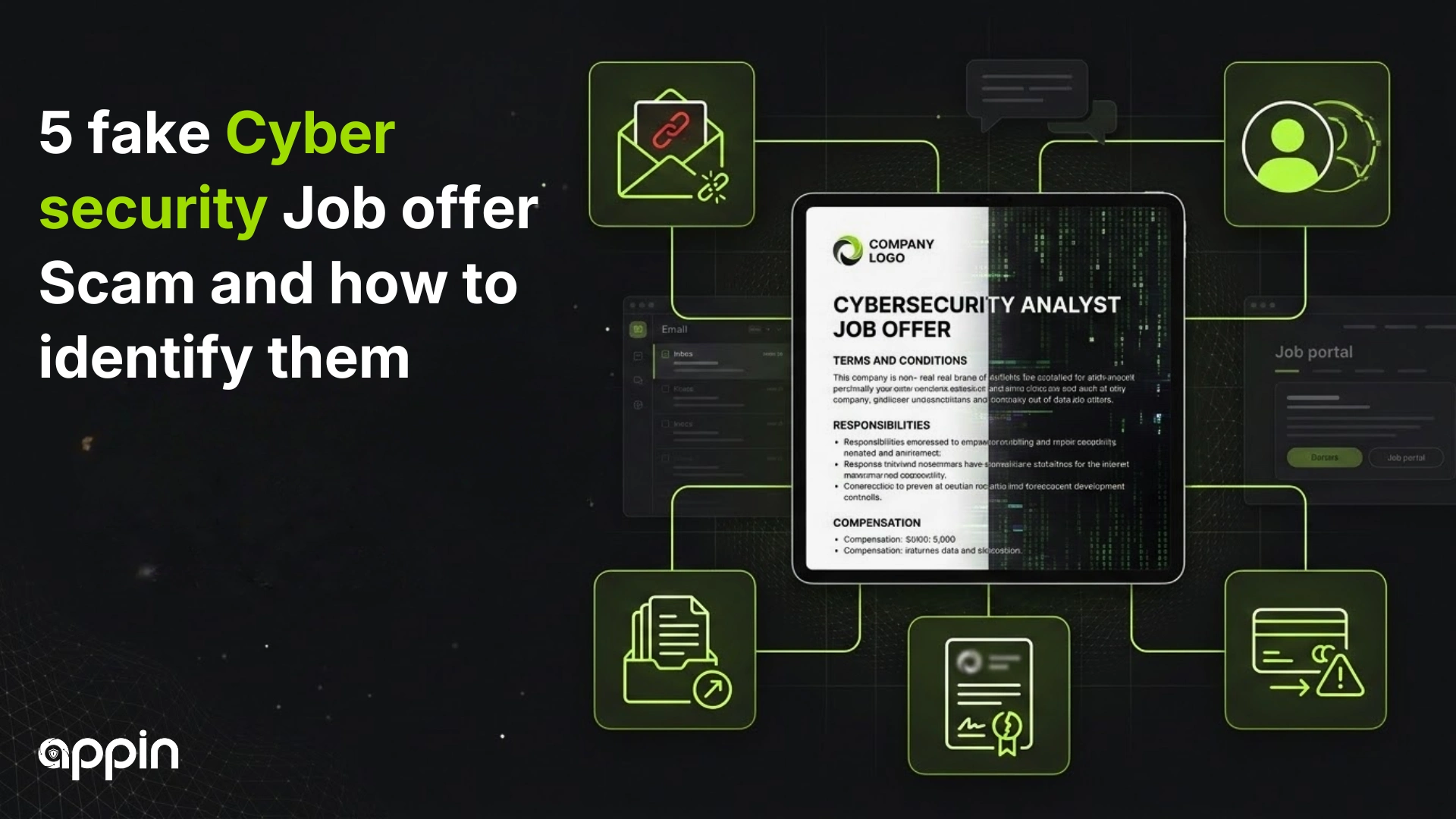
5 Fake Cybersecurity Job Offer Scams and How to Identify Them
The cybersecurity field is growing fast, and scammers know that job seekers are eager to land their first role. Fake cybersecurity job offer scams target people who are actively applying for positions online. These employment scams cost Americans over $501 million in 2024 alone according to the Federal Trade Commission, which is a fivefold increase from 2020. Recognizing these five common scam patterns helps you protect your personal information and avoid financial loss during your job search.
What Are the 5 Fake Cybersecurity Job Offer Scams and How Can You Identify Them?
Fake cybersecurity job scams include phishing job emails, fake recruiters, upfront payment scams, fake technical tasks, and offer letter fraud. You can identify them by checking company details, avoiding payments, and verifying communication sources.
Research from Norton shows that 33% of job seekers have encountered employment scams or suspicious postings during their search. LinkedIn detected more than 83 million fake profiles between January and June 2025 according to Forbes. These numbers show that scammers are actively targeting professionals across every industry, especially in high demand fields like cybersecurity.

-
Phishing Emails Pretending to Be Cybersecurity Job Offers
Scammers send emails that look like real job offers from well known companies to steal your personal information and login credentials.
These fake job offers arrive in your inbox with company logos and professional formatting that look convincing at first glance. The email might mention a cybersecurity analyst position with an attractive salary and ask you to click a link to apply or download an attachment with job details. That link often leads to a fake website that captures your password, or the attachment installs malware on your device.
A study by the FBI found that phishing remains the number one reported cybercrime, with over 859,000 complaints in 2024 and losses exceeding $16 billion. Many of these phishing attempts target job seekers specifically because they are more likely to open unexpected emails from companies they applied to. Always check the sender email address carefully and visit the company website directly instead of clicking links in unsolicited messages.
- Check the sender domain to see if it matches the official company website
- Hover over links before clicking to preview the actual destination URL
- Legitimate recruiters never ask for passwords or Social Security numbers over email
▸ Email Safety During Job Search: How to verify job offer emails and avoid phishing attempts
▸ Phishing Attack Prevention: Tools and techniques to protect yourself from email scams
-
Fake Recruiters on Social Media and Messaging Apps
Scammers create fake profiles on LinkedIn and WhatsApp to contact candidates with fraudulent job opportunities that seem too good to be true.
These fake recruiters often message you first with a job opportunity that offers an unusually high salary for a remote cybersecurity role. They might ask you to move the conversation to WhatsApp or Telegram where the platform has fewer security controls. Once you engage, they slowly build trust before asking for personal details, bank account information, or payment for processing fees.
LinkedIn reported detecting over 83 million fake profiles in just the first six months of 2025 according to Forbes. Gartner predicts that one quarter of online candidate profiles could be inauthentic by 2028. These fake recruiters exploit the trust that professionals place in networking platforms, making it critical to verify every contact before sharing any personal information.
- Look for a verified company affiliation on the recruiter profile
- Search the recruiter name and company on Google to confirm they exist
- Real recruiters conduct interviews through official company channels, not personal messaging apps
▸ Social Media Scam Awareness: How to spot fake profiles and fraudulent messages on LinkedIn
▸ Recruitment Scam Warning Signs: Red flags that indicate a recruiter may not be legitimate
-
Upfront Payment Scams for Job Processing or Training
Scammers ask you to pay for training materials, background checks, or equipment before you start working, then disappear with your money.
This is one of the most common employment scams reported to the Federal Trade Commission. The scammer presents a fake job offer and tells you that you need to pay a fee for training, software licenses, background verification, or security clearance processing. After you send the money through wire transfer, gift cards, or cryptocurrency, the person stops responding entirely.
The FTC reported that job scam losses topped $220 million in just the first half of 2024. Legitimate cybersecurity employers pay for your training, equipment, and background checks themselves. No real company will ask you to pay out of pocket before you receive your first paycheck. If someone asks for money upfront, that is an immediate sign of a scam.
- Legitimate companies never ask candidates to pay for hiring expenses
- Be suspicious of requests for gift cards, wire transfers, or crypto payments
- Research the company name online with the word scam to check for complaints
▸ Job Payment Scam Protection: How to identify and avoid upfront fee scams during your job search
▸ Cryptocurrency Payment Fraud: Why scammers prefer crypto and how to protect yourself
-
Fake Technical Tasks That Steal Your Work Without Paying
Scammers assign real cybersecurity tasks like penetration testing reports or security audits, collect your work, and then ghost you without hiring or paying you.
This type of scam involves giving candidates extensive technical assignments that mirror actual job responsibilities. You might be asked to complete a full penetration testing report, write a security policy document, or configure a firewall as part of the interview process. The scammers then use your deliverable for their own clients or projects without ever intending to hire you.
The FTC reported that task scams accounted for nearly 40% of all job scam reports in 2024, with about 20,000 people filing complaints in the first half of the year alone. While some testing tasks are normal in legitimate hiring, red flags include assignments that require significant time investment, have no clear connection to the interview process, or ask you to work on real client systems without any compensation.
- Legitimate companies limit test tasks to a few hours at most
- Be wary of assignments that ask for completed reports or real client deliverables
- Ask for clarity on how the task connects to the actual hiring decision
▸ Interview Task Best Practices: How to tell the difference between real tests and scam assignments
▸ Freelance Work Protection: Safeguards for professionals who complete project based work
-
Fake Offer Letters and Appointment Emails
Scammers send counterfeit offer letters with company letterhead to collect your banking details, Social Security number, or other sensitive data under the guise of onboarding.
A fake offer letter often arrives as a PDF or Word document attached to an email. It includes company logos, your name, a job title, salary details, and instructions to fill out forms with your personal and banking information. The document may contain typos, incorrect company addresses, or formatting errors that reveal it was not created by an actual human resources department.
These fraudulent documents are designed to harvest enough personal data to commit identity theft or drain your bank accounts. The scammers may also ask you to purchase equipment from a specific vendor or set up direct deposit using their account details. Always verify any offer letter by contacting the company directly through their official website or phone number, never through information provided in the suspicious email.
- Check for spelling errors, blurry logos, and incorrect contact information on the letter
- Call the company HR department using a number from their official website to confirm the offer
- Never share banking details or Social Security numbers before verifying the hiring manager
▸ Offer Letter Verification Guide: Steps to confirm whether a job offer is legitimate
▸ Identity Theft Protection: What to do if you shared personal data with a scammer

Counterarguments and Limitations
Not every suspicious job listing is an intentional scam. Some postings come from third party agencies that have outdated information or poorly written descriptions. Small companies without dedicated HR teams may use personal email addresses for initial contact, which can look suspicious even when the opportunity is real. The challenge is distinguishing between genuine but unprofessional outreach and actual fraud.
Additionally, some job seekers may be too cautious and miss legitimate opportunities because they assume every unsolicited message is fake. The key is to verify independently rather than ignoring or blindly trusting every communication. Using official channels to confirm details takes only a few minutes and protects you without costing you real job prospects.
Key Takeaways
- Job scam losses reached $501 million in 2024, a fivefold increase from $90 million in 2020 according to the FTC
- One third of job seekers have encountered employment scams during their search based on Norton Research
- LinkedIn removed over 83 million fake profiles in just six months as reported by Forbes
- Task scams made up nearly 40% of all job scam reports in 2024 according to FTC data
- Legitimate employers never ask for upfront payments or sensitive personal data via email
- Always verify job offers through official company channels before sharing any information
