

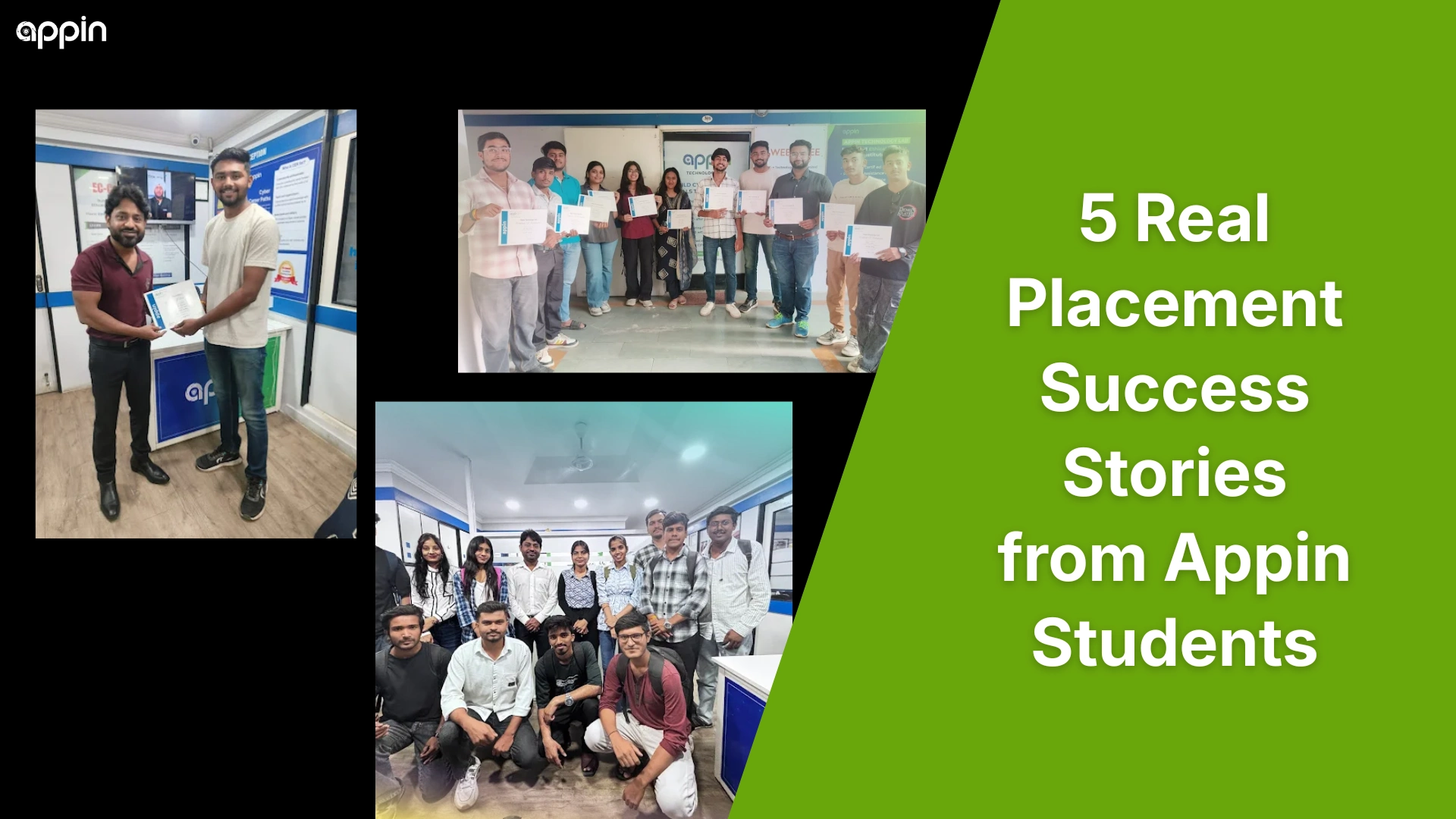
Appin Student Testimonials: Real Cybersecurity Journeys from Beginners to Career Starters
Most people assume cybersecurity is only for coders or students with a strong technical background.
But when you look at real student journeys, a different pattern shows up.
Students from non-technical fields, with zero clarity or even misconceptions about hacking, are entering cybersecurity and building real career paths.
These testimonials highlight what actually changes during that journey.
1. “I didn’t even have basic computer knowledge, but everything became clear here.”
— Jiya, Forensic Science Student, Cybersecurity Learner
Context
Coming from a forensic science background, she had no technical exposure. Computers were not part of her core learning, and even basic concepts felt unfamiliar.
What Actually Changed
Instead of overwhelming her with advanced topics, the learning started from fundamentals. Concepts were explained in a way that made them easy to understand, even for someone without prior experience.
What stands out is her perspective on cybercrime. She connects cybersecurity with real-world issues, especially crimes happening online. This adds meaning to the learning process beyond just technical skills.
She also points out the growing relevance of digital forensics, where cybersecurity knowledge plays a key role.
Key Results
- Built strong clarity in basic computer and cybersecurity concepts
- Understood real-world cybercrime applications
- Identified career opportunities in digital forensics
2. “I used to think hacking meant breaking into Instagram accounts. That completely changed.”
— Payal, Cybersecurity Student, Beginner Level
Context
Like many beginners, her understanding of cybersecurity came from social media. She believed hacking was the core of the field and assumed it required deep coding skills.
What Actually Changed
The biggest shift was in her understanding of the field itself.
She realized cybersecurity is just one part of a much broader domain called information security. This includes multiple roles that don’t necessarily require advanced coding.
This clarity matters because many students hesitate to start due to misconceptions, not actual difficulty.
Key Results
- Gained clarity on cybersecurity vs information security
- Broke common myths about hacking
- Discovered accessible entry points into the field
3 . “I was confused about my career, but this gave me a clear starting point.”
— Beginner, Exploring Technical Career Options
Context
He wanted to enter a technical field but lacked direction. Like many students, the challenge wasn’t lack of interest, but confusion about where to start.
What Actually Changed
The structured guidance helped him move from confusion to action.
Instead of just theoretical learning, the training combined practical sessions with concepts, making it easier to understand how things work in real scenarios.
Mentorship also played a role in keeping the learning consistent and focused.
Key Results
- Gained clarity on entering the cybersecurity field
- Experienced practical + theoretical learning
- Built confidence to recommend the field to others
4. “Even from a non-technical background, you can build a career in cybersecurity.”
— Non-Technical Student, Ethical Hacking Learner
Context
She discovered cybersecurity through social media and initially felt unsure due to her non-technical background. Like many students, she assumed technical fields would be too difficult.
What Actually Changed
The biggest realization was that cybersecurity is not limited to technical experts.
She learned that both technical and non-technical students can enter the field, depending on how they approach learning.
Her perspective also highlights a common hesitation among girls entering tech, and how exposure and guidance can change that mindset.
Key Results
- Overcame fear of entering a technical field
- Understood different paths within cybersecurity
- Built confidence to pursue ethical hacking
5. “You don’t just learn theory here, you work on real tools and projects.”
— Anmol, Cybersecurity Student, Hands-On Training Experience
Context
For many students, the biggest gap in learning is the lack of practical exposure. Theory alone doesn’t prepare them for real roles.
What Actually Changed
The focus on hands-on training made the difference.
Students get exposure to tools used in cybersecurity roles, along with opportunities to work on live projects. This bridges the gap between learning and real-world application.
Another important factor is continued support through mentorship and career guidance, which helps students move beyond just completing a course.
Key Results
- Gained hands-on experience with cybersecurity tools
- Worked on practical and live project scenarios
- Received mentorship and career guidance support
What These Students Have in Common
Across different backgrounds and experiences, a few clear patterns emerge:
- Most students started with little to no clarity
- Misconceptions about hacking and coding were common
- Practical learning made a bigger impact than theory
- Mentorship helped maintain consistency
- Confidence increased after understanding the field properly
This suggests that success in cybersecurity is less about background and more about approach and guidance.
Career Scope in Cybersecurity
Cybersecurity continues to grow as digital systems expand across industries.
Students are exploring roles such as:
- SOC Analyst
- Ethical Hacker
- Information Security Analyst
- Digital Forensics Expert
The demand is increasing not just in private companies, but also in sectors where data protection and cybercrime investigation are critical.
Thinking About Starting a Career in Cybersecurity?
Based on these student experiences, cybersecurity can be a good fit if you:
- Are starting from a non-technical background
- Want a structured entry into a technical field
- Prefer practical, hands-on learning
- Are interested in solving real-world digital problems
It may not be the right fit if you expect instant results without consistent effort.
