

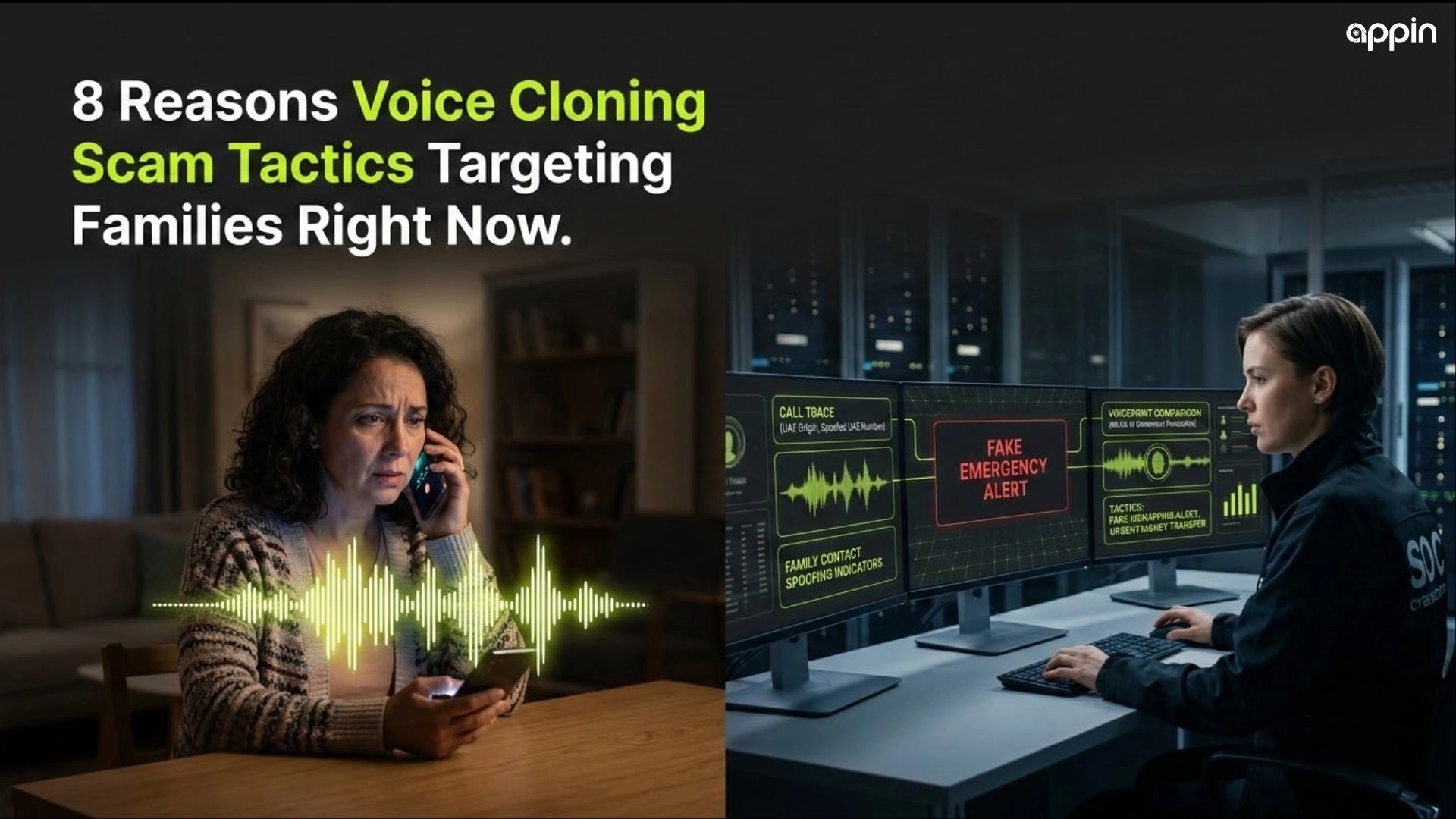
8 Voice Cloning Fraud Tactics Targeting Families Right Now
What Are the Voice Cloning Fraud Tactics Targeting Families Right Now?
Criminals use AI to copy the voices of family members and create fake emergency situations that trick people into sending money or sharing personal information.
Voice cloning fraud has become one of the fastest growing threats to families worldwide. Criminals only need a few seconds of audio from social media to recreate a voice that sounds almost identical to your loved one. Once they have that voice, they use it to manufacture emergencies, impersonate authority figures, and exploit the trust between family members.
According to McAfee research, 1 in 4 people have experienced an AI voice scam or know someone who has. Americans lost over $5 million to these schemes in 2025 alone. The FTC reports a four fold increase in impersonation scam reports, making this a threat that no family can afford to ignore.

-
Fake Emergency Calls From Family Members
Scammers copy a family member’s voice using AI and call pretending they are hurt, arrested, or stranded, then demand immediate payment.
This is the most common form of AI voice scam targeting families. A criminal clones the voice of a child, parent, or spouse and calls with a story designed to create panic. They might claim there was a car accident, an arrest, or a medical emergency. The goal is to make the victim act fast without thinking.
In one widely reported case, a mother identified as Rachel lost her life savings after receiving a call that sounded exactly like her college aged daughter crying and asking for help. The caller ID even displayed her daughter’s name and phone number. By the time she realized the call was fake, the money was gone.
The emotional manipulation in these calls is deliberate. Scammers create a sense of urgency so victims cannot pause to verify the story. They often demand payment through wire transfers, gift cards, or cryptocurrency, which are nearly impossible to recover once sent.
-
Kidnapping and Distress Voice Scams
Attackers use cloned voices to simulate hostage or kidnapping situations, demanding ransom payments from terrified family members.
Kidnapping scams powered by AI voice cloning are particularly devastating because they exploit a parent’s worst fear. Criminals clone a child’s voice and add sounds of crying, screaming, or a threatening male voice in the background. They demand immediate payment, often through untraceable methods like gift cards or wire transfers.
The Beaumont Police Department in Texas issued a warning after a local family received a call from someone claiming to hold their daughter hostage. The mother heard her daughter crying and saying “mom come pick me up” before a man demanded money. Police confirmed the daughter was safe and out of state, but the emotional damage was already done.
These scams succeed because panic overrides logic. Victims are told not to contact police or the call will end badly. Understanding how voice cloning scams work is the first step to resisting these high pressure tactics.
-
AI Generated Voice Messages From Relatives
Fraudsters send fake voice notes through WhatsApp or voicemail, impersonating relatives who need money for unexpected expenses.
Not all voice cloning fraud happens through live phone calls. Criminals also send pre-recorded voice messages through WhatsApp, iMessage, or traditional voicemail. These messages sound like a family member explaining a sudden problem and asking for a quick money transfer.
The advantage of this approach for scammers is that victims cannot ask questions in real time. The message feels authentic because it contains the cloned voice of someone they know, and the one way nature of the message prevents immediate verification. Victims often respond with money before they have a chance to call the real family member.
Research from the American Bar Association shows these AI enhanced scams cause not only financial losses but also deep emotional trauma. Victims feel violated because the voice of someone they love was used as a weapon against them.
-
Fake Bank Verification Calls Using Cloned Voices
Scammers clone the voice of a bank employee or family member to trick victims into sharing account details, OTPs, or passwords over the phone.
Bank related voice fraud is growing rapidly alongside traditional family emergency scams. Criminals clone the voice of a bank representative or even a trusted family member who claims to be helping with a banking issue. They ask for verification codes, account numbers, or login credentials, which they then use to drain bank accounts.
The Department of Telecommunications has issued public warnings reminding consumers that a convincing voice does not mean a genuine call. Your OTP is private and should never be shared with anyone, no matter how legitimate the caller sounds.
This type of attack exploits the natural trust people place in banking institutions and authority figures. Once criminals gain access to banking credentials, they can transfer funds, open credit accounts, and steal identities within minutes.
-
Voice Cloning Through Social Media Audio Samples
Attackers collect voice samples from public videos, reels, and podcasts posted on social media, then use them to train AI voice models.
One of the most alarming aspects of deepfake audio technology is how easily criminals can gather the raw material they need. Every video you post on Instagram, TikTok, YouTube, or Facebook contains a voice sample that AI tools can use to build a convincing clone. Even short clips as brief as two to three seconds are enough.
McAfee Labs research confirms that cybercriminals need just three seconds of audio to clone a voice with 95% accuracy. This means a birthday video, a TikTok lip sync, or a casual Instagram story can provide everything a scammer needs. The more audio available online, the more accurate and convincing the clone becomes.
Reducing your digital audio footprint is one of the most effective ways to protect family from voice scams. Families should discuss what audio they share publicly and consider limiting voice content on open social media profiles.
-
Fake School or Hospital Emergency Calls
Scammers pretend to be school officials or hospital staff using cloned voices, claiming a child is hurt and needs immediate medical payment.
Schools and hospitals represent trusted institutions, which makes them effective cover stories for scammers. Criminals clone the voice of a school administrator, nurse, or doctor and call parents claiming their child has been in an accident or has a medical emergency. They demand payment for hospital bills, surgery, or transportation before treatment can begin.
These scams target parents specifically because the emotional trigger is so powerful. No parent wants to imagine their child in pain, and scammers exploit that instinct by adding time pressure. They may say the child is unconscious and cannot confirm identity, which prevents the parent from speaking directly with the child.
Police departments across the United States have issued warnings about this tactic. The advice is consistent: always verify emergency calls through official channels before taking any action.
-
Family Business and Financial Impersonation
Criminals clone the voice of relatives who manage family finances or run businesses to authorize fake transactions and steal money.
Families involved in business together face an elevated risk because scammers can target the financial decision maker. By cloning the voice of a family member who handles money, criminals can authorize wire transfers, approve payments, or request changes to bank account details. These attacks often combine voice cloning with email compromise for maximum credibility.
In the corporate world, deepfake audio has been used to impersonate CEOs and executives, resulting in losses of hundreds of thousands of dollars per incident. The same technology is now being applied to family businesses where informal communication patterns and trust make verification less rigorous.
Cyble reports that AI powered deepfakes were involved in over 30% of high impact corporate impersonation attacks in 2025. Family businesses are even more vulnerable because they often lack the formal verification processes that large corporations have in place.

-
Multi Channel AI Scam Campaigns
Direct answer: Scammers combine cloned voices with fake text messages, emails, and deepfake videos to create coordinated attacks that feel completely real.
The most sophisticated criminals do not rely on a single channel. They combine AI voice cloning with text messages, spoofed emails, and even deepfake video calls to build a complete illusion. A victim might receive a text from what looks like their daughter’s number, followed by a voice call, and then an email with fake documents that appear to support the emergency story.
According to the 2026 International AI Safety Report, the tools powering these scams are free, require no technical expertise, and can be used anonymously. This zero cost, zero skill barrier means attacks can be launched at massive scale and coordinated across multiple communication channels.
Multi channel attacks are harder to detect because each piece of evidence seems to confirm the others. A voice message that matches a text message feels more real than either would alone. AI voice fraud prevention requires understanding that scammers now operate across every communication platform simultaneously.
Key Takeaways
- Criminals only need 3 seconds of audio to clone a voice with 95% accuracy
- Family emergency calls are the most common voice cloning fraud tactic
- A family code word is the simplest and most effective defense
- Always verify emergency calls by hanging up and calling back on a known number
- Limit the amount of voice content your family shares on public social media
