

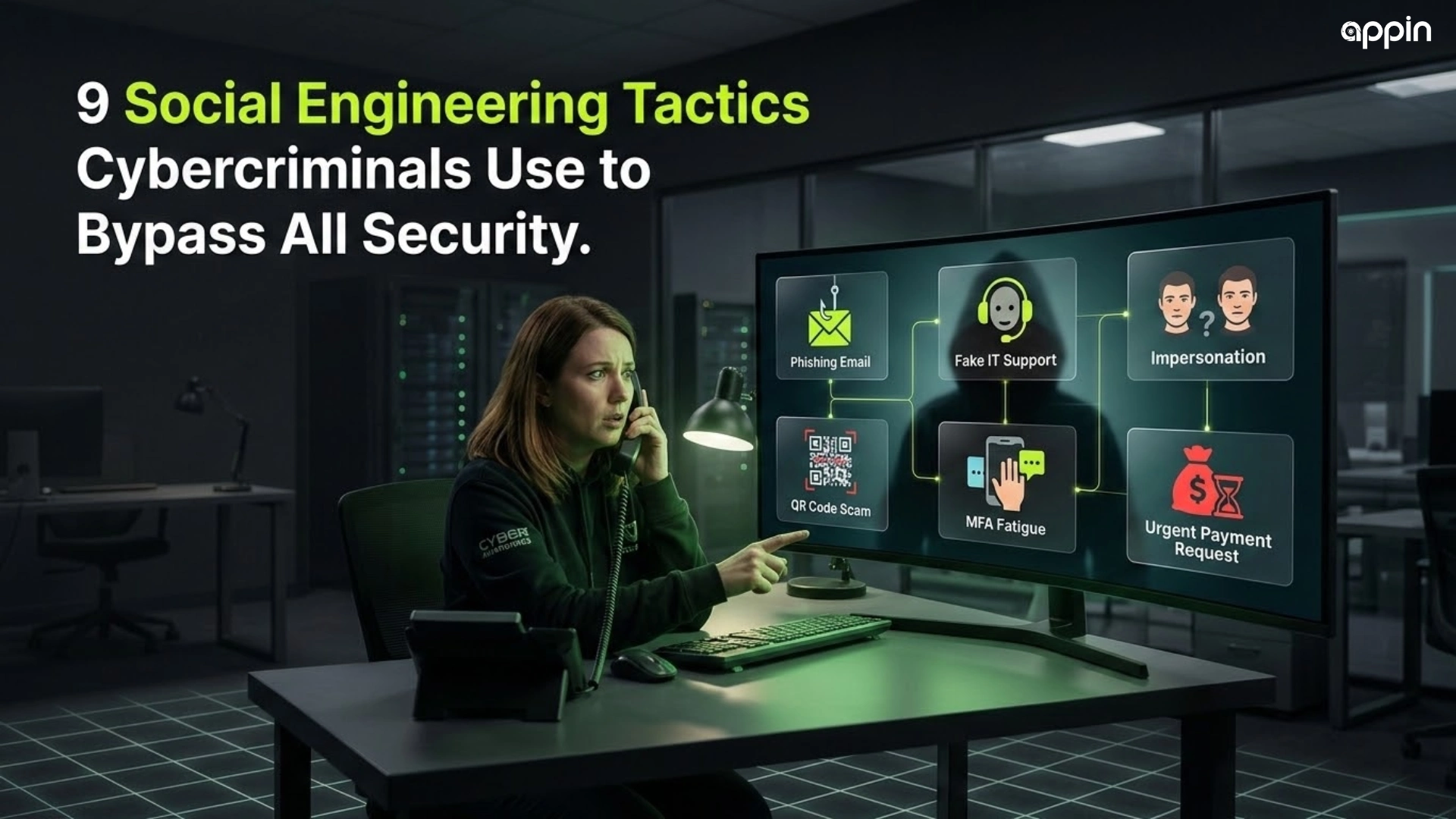
What Social Engineering Attacks Do Cybercriminals Use to Bypass Security?
Cybercriminals use social engineering attacks to manipulate people into revealing passwords, sending money, or granting system access by exploiting trust, fear, urgency, and normal human behavior patterns.
Social engineering attacks target people instead of technology. According to Verizon 2025 Data Breach Investigations Report, 60% of all data breaches involve the human element. Secureframe research shows that 99% of successful cyberattacks include some form of social engineering, making it the single most effective attack strategy in use today.
The financial impact is massive. The FBI Internet Crime Complaint Center reported total losses exceeding $20.9 billion in 2025, with business email compromise alone costing $3.04 billion. The average organization now faces more than 800 social engineering attacks every year. These numbers prove that technology alone cannot stop determined attackers who know how to manipulate people.

-
Phishing Emails That Look Legitimate
Attackers send emails designed to look like messages from trusted companies or colleagues, tricking recipients into clicking malicious links or sharing login credentials.
Phishing remains the number one crime type reported to the FBI IC3, accounting for 23% of all 859,532 complaints in 2024 alone. These emails mimic trusted brands like banks, shipping companies, and tech platforms with near perfect accuracy. The goal is always the same: steal credentials or install malware.
Common phishing tactics include fake password reset notices, fake invoice attachments, and urgent account warnings that create a false sense of panic. Google blocks 99.9% of phishing attempts from reaching users, but the remaining 0.1% still causes billions of dollars in damage because of the sheer volume of attacks.
The most dangerous phishing emails target employees with access to financial systems or sensitive data. A single compromised account can give attackers an entry point into an entire corporate network.
-
Voice Cloning and Fake Phone Calls
Criminals use AI technology to clone real voices and make phone calls that sound exactly like trusted people, then use those calls to request money transfers or sensitive information.
Voice phishing, known as vishing, surged by 442% in the second half of 2024 according to CrowdStrike research. AI tools can now clone a voice from just three seconds of audio pulled from social media, corporate videos, or voicemail messages. The result is a phone call that sounds completely authentic.
In one of the most publicized cases, a finance director at a multinational company in Singapore joined a video call with what appeared to be senior executives including the CFO. Every face was a deepfake and every voice was AI generated. The director authorized a $499,000 transfer before discovering that none of the people on the call were real.
This form of human hacking works because people trust what they can hear and see. When a voice matches someone you know, your natural skepticism drops significantly.
-
Pretexting to Gain Trust
Pretexting is when attackers invent a fake scenario or identity to convince victims to share personal information, system access, or financial details that they would normally protect.
Pretexting works because it builds a believable story around the request. A criminal might pose as an IT support worker who needs your login credentials to fix a supposed security problem. Or they might pretend to be an HR representative conducting a benefits enrollment update that requires your Social Security number and bank details.
The Federal Trade Commission reports that pretexting is especially effective against older adults, who suffered nearly $5 billion in losses in 2024 according to FBI data. Scammers use information gathered from social media and public records to create pretexts that feel personal and credible.
Social engineering examples in cybersecurity frequently involve attackers spending days or weeks researching a target before making contact. The more the pretext aligns with the victim’s real life, the higher the success rate.
-
Baiting With Free Offers or Downloads
Baiting scams lure victims with tempting free items like software downloads, gift cards, or USB drives that secretly install malware or steal data when accessed.
Baiting exploits curiosity and greed. A common tactic involves leaving infected USB drives in office parking lots or lobbies, labeled with enticing text like “Employee Salaries 2025” or “Executive Bonus List.” When someone plugs the drive into their computer, malware installs automatically and gives attackers remote access to the network.
Digital baiting is even more widespread. Fake software downloads, free movie streaming sites, and too good to be true gift card offers are all designed to trick users into downloading malicious files. Once installed, this malware can capture keystrokes, steal passwords, and encrypt files for ransom.
The key to preventing these attacks is teaching employees and family members that free offers online almost always come with a hidden cost. Legitimate companies rarely distribute software through unexpected channels or offer valuable items without a clear business reason.
-
Smishing Through Fake SMS Messages
Smishing uses text messages that appear to come from banks, delivery services, or government agencies to trick victims into clicking links that steal personal and financial information.
Smishing now accounts for 35% of all phishing attacks according to SentinelOne. The reason is simple: people trust text messages more than emails, and they are more likely to click links on their phones without careful inspection. In 2024, the United States reported 484,500 phishing incidents, a number that continues to climb.
The most common smishing scams include fake package delivery notifications, fake bank fraud alerts, and fake tax agency messages. These texts create urgency by claiming a package will be returned, an account will be frozen, or a payment will be delayed unless the recipient takes immediate action.
How cybercriminals use social engineering through text messages is particularly effective because mobile devices lack the same security tools available on desktop computers. Antivirus and spam filters are weaker on phones, making smishing a reliable entry point for attackers.
-
Tailgating Into Restricted Areas
Tailgating happens when an unauthorized person follows an authorized employee through a secured door or gate, bypassing physical security controls without using their own credentials.
Not all social engineering happens online. Tailgating is a physical attack where someone simply walks through a door behind an employee who badges in. The attacker might pretend to be a delivery driver, a forgotten interview candidate, or a contractor who forgot their access card. Most employees hold the door out of politeness without asking questions.
The World Economic Forum Global Cybersecurity Outlook survey found that 72% of organizations reported increased cyber risks, and physical security gaps remain a significant vulnerability. Once inside a building, an attacker can connect to internal networks, access unlocked workstations, or install rogue devices on network switches.
Preventing this form of human hacking requires both technology and culture. Badge controlled turnstiles, security awareness training, and a clear policy that every employee must challenge unfamiliar faces all help reduce tailgating incidents.
-
Fake Technical Support Scams
Scammers pose as IT support staff from well known companies and convince victims to grant remote access to their computers or reveal sensitive account information.
Fake technical support scams have existed for years but remain highly effective. The attacker calls or displays a pop up warning that claims the victim’s computer is infected with a virus. They offer to fix the problem remotely and ask the victim to install software that actually gives the scammer full control of the device.
The FBI IC3 report shows that tech support fraud continues to rank among the top complaint categories. These scams target both individuals and businesses, with attackers sometimes posing as internal IT staff to gain access to corporate systems. Once remote access is granted, criminals can install ransomware, steal financial data, or create backdoor accounts for future access.
Legitimate technology companies will never call you unsolicited to report a virus or ask for remote access. Preventing social engineering attacks of this kind starts with understanding that real support teams do not operate this way.
-
Social Media Information Gathering
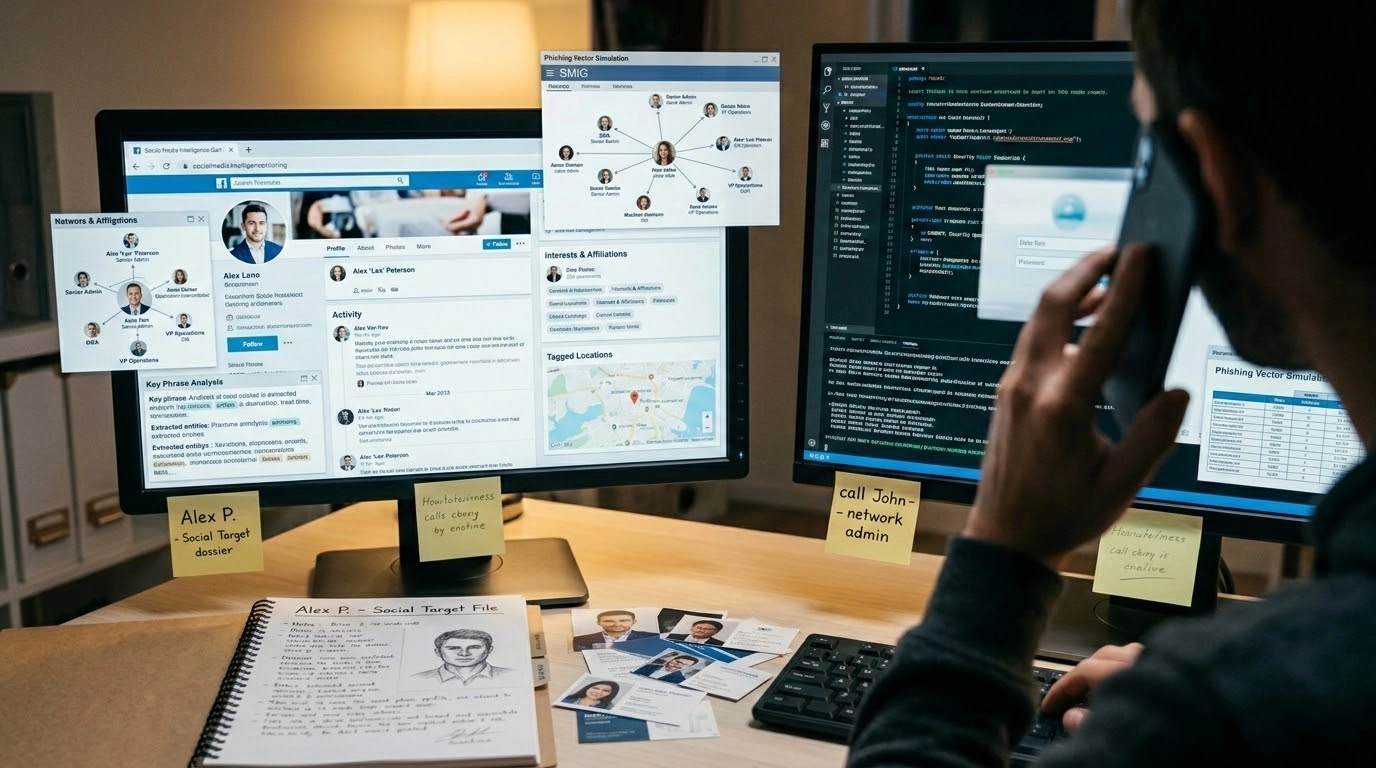
Criminals collect personal and professional details from public social media profiles to build targeted attacks that feel personal and credible to their victims.
Social media platforms are gold mines for attackers preparing social engineering campaigns. A LinkedIn profile reveals job title, company, colleagues, and professional history. Instagram and Facebook posts expose family members, vacation plans, and daily routines. All of this information helps attackers craft pretexts that are difficult to question.
Cybelangel research on deepfake CEO fraud shows how attackers use publicly available media and social media profiles to impersonate executives. In the Singapore video call fraud case, the attackers used media found online to create convincing deepfakes of multiple senior leaders, making the entire setup feel legitimate.
The solution is not to abandon social media but to practice information discipline. Review privacy settings regularly, limit public exposure of voice and video content, and think carefully about what professional details are visible to anyone on the internet.
-
Business Email Compromise Attacks
Business email compromise attacks impersonate executives, vendors, or partners through fake or compromised email accounts to authorize fraudulent wire transfers or steal sensitive company data.
Business email compromise is the costliest form of social engineering in existence. The FBI reports that BEC losses reached $3.04 billion in 2025, making it the second most expensive crime type tracked by the IC3. Over the past three years, BEC has stolen nearly $8.5 billion from American businesses alone.
These attacks work by compromising or spoofing email accounts associated with regular business transactions. An attacker might impersonate a vendor to redirect a legitimate payment to a fraudulent bank account. Or they might pose as a CEO ordering an urgent wire transfer that bypasses normal approval processes.
The most sophisticated BEC schemes now combine email spoofing with voice cloning and deepfake video, creating multi-channel attacks that are nearly impossible to detect through any single security control.
Key Takeaways
- 60% of all data breaches involve the human element according to Verizon
- Business email compromise caused $3.04 billion in losses in 2025
- 99% of successful cyberattacks include some form of social engineering
- Voice cloning and deepfake technology are making attacks more convincing than ever
- Employee training and verification protocols remain the most effective defense
